Investment
Farmland as a Second Income Source for Bangalore IT Professionals in 2026
14 Apr 2026
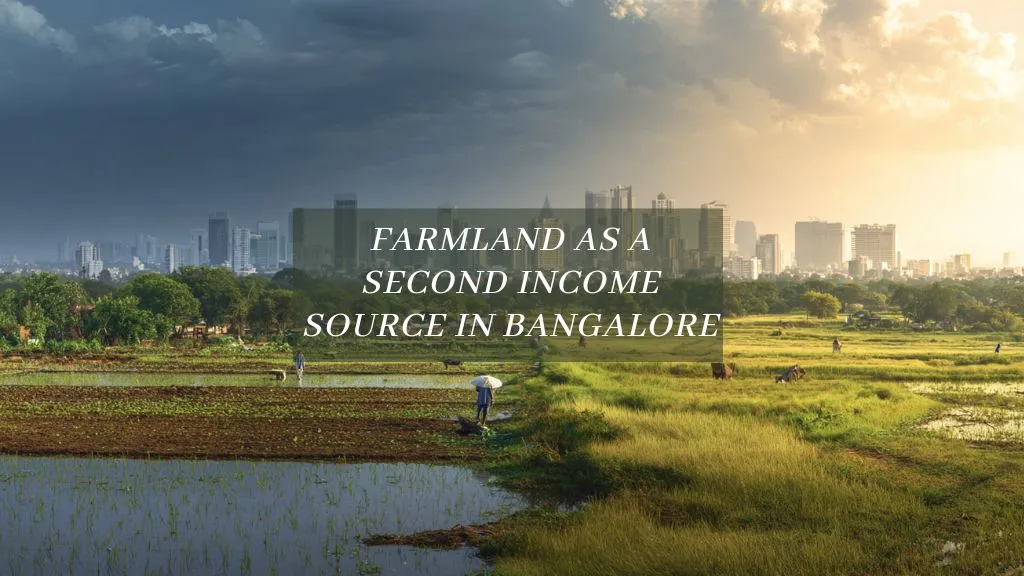
If you’re working in the Bangalore IT sector, you know the drill. The 9-to-9 grind, the fluctuating stock market, and the constant search for a "side hustle" that doesn't actually require you to work another 4 hours after your shift. Most of us park our money in FDs or tiny 2BHKs in crowded areas, but lately, I’ve seen a massive shift toward something much greener.
I'm talking about investing in agricultural land.
A few years ago, buying a farm was just about having a place to chill on weekends. But in 2026, it’s become one of the smartest ways to build a "second salary." If you've been wondering how to make passive income from land without actually picking up a hoe yourself, this guide is for you. At Swasya Living, we’re seeing more techies than ever moving their portfolios from crypto and stocks into soil.
The Passive Income Snapshot: Farmland vs. Traditional Assets
Income Source | Effort Level | Consistency | 2026 ROI Potential |
Rental Apartment | High (Tenants/Repair) | Monthly | 3–5% (Low) |
Fixed Deposits | Zero | Monthly/Yearly | 6–7% (Inflation eats this) |
Managed Farmland | Low (Expert Managed) | Seasonal/Annual | 12–18% (Appreciation + Yield) |
Timber/Agroforestry | Very Low | Long-term | 25%+ (Lumpsum) |
Why Passive Income from Land is the New "Gold" for IT Folks
The beauty of passive income from land is that land doesn't depreciate. Your laptop gets old, your car loses value the moment it leaves the showroom, but a well-managed farm just gets better with age.
When you are investing in agricultural land, you aren't just buying dirt; you’re buying a biological factory. While you’re sitting in a stand-up meeting in Manyata Tech Park, your Sandalwood trees are growing, your bees are making honey, and your land's market value is climbing because of the new STRR (Satellite Town Ring Road) connectivity.
Top 5 Ways to Make Your Land Work for You
A. Managed Leasing & Contract Farming
This is the "easiest" entry point. You own the land, and a professional management company (like us!) handles the cultivation. We partner with organic brands that need a steady supply of high-value crops. You get a share of the profit without ever getting mud on your shoes. It's the ultimate farm investment strategy for busy people.
B. The "Timber Bank": Agroforestry
Think of this as a long-term FD. By planting high-value timber like Melia Dubia, Mahogany, or Sandalwood, you are essentially growing your retirement fund. These trees require very little water after the first two years. In 10–12 years, the harvest can give you a payout that beats almost any mutual fund.
C. Agritourism & Weekend Rentals
With the rise of "Slow Living," everyone in Bangalore wants to escape the city. If your farm has a small eco-cottage or even just a clean camping spot, you can list it on Airbnb or a similar platform. Passive income from land through weekend stays is booming right now.
D. Beekeeping (The "Sweet" Side Hustle)
Beekeeping is low-maintenance and high-reward. Not only do the bees help pollinate your crops (increasing yield by 20–30%), but the organic honey you harvest can be sold at a premium. It’s a small-scale farm investment that pays off every season.
E. Solar Leasing
If a portion of your land is rocky or not suitable for intensive farming, you can lease it to energy companies for solar panels. This gives you a fixed monthly rental for 15–20 years. Talk about "set it and forget it"!
The Managed Farmland Advantage: No DIY Needed
One of the biggest fears people have about how to make passive income from land is the "local hassle", security, labor, and water. This is why "Managed Farmlands" are the future.
When you choose a professional farm investment model, you get:
24/7 Security: No more worrying about boundary disputes.
Expert Agronomists: They know exactly what to plant based on the soil in Kanakapura or Sakleshpur.
Ready Infrastructure: Borewells, drip irrigation, and internal roads are already there.
Real-World Example: The "IT Manager's Portfolio"
Let’s say you buy a 10,000 sq. ft. plot.
Year 1-5: You earn small but steady returns from short-term vegetable crops or medicinal herbs.
Weekends: You save ₹10k a month on resort bills by staying at your own farm.
Year 10: Your timber trees are ready for harvest.
Overall: The land value itself has likely doubled or tripled due to Bangalore's expansion.
This is why investing in agricultural land is no longer just for "farmers", it’s for anyone who wants to de-risk their life from the volatility of the tech world.
Start Planting Your Second Income
The days of relying on a single paycheck are over. Investing in agricultural land is about building a legacy that provides for you today and grows for your kids tomorrow.
Whether it's through passive income from land via organic produce or the long-term appreciation of the plot itself, the soil doesn't lie. It’s consistent, it’s tangible, and it’s a lot more relaxing than watching a red line on a stock market app.
At Swasya Living, we’re helping people from across India transition into this lifestyle every day. Our projects are designed for anyone, no matter where you're based, who wants a secure, legal, and highly productive asset that works as hard as they do. You don't have to live next door to the farm to reap the rewards of the land; you just need the right team managing it.
FAQs
1. Do I need to be a farmer to buy land in Karnataka?
Nope! The laws changed recently. Anyone can now buy agricultural land in Karnataka. This is the best time to look at farm investment options before prices skyrocket further.
2. How much involvement is needed from my side?
If you go with a managed model? Practically zero. You get a monthly or seasonal report and a profit check. You can visit whenever you want to relax, but you don't have to be there to make money.
3. What are the risks?
Like any investment, there are risks like weather or pests. But a managed farm mitigates this by diversifying crops. If the mangoes have a bad year, the timber is still growing, and the solar lease is still paying.
If you’re working in the Bangalore IT sector, you know the drill. The 9-to-9 grind, the fluctuating stock market, and the constant search for a "side hustle" that doesn't actually require you to work another 4 hours after your shift. Most of us park our money in FDs or tiny 2BHKs in crowded areas, but lately, I’ve seen a massive shift toward something much greener.
I'm talking about investing in agricultural land.
A few years ago, buying a farm was just about having a place to chill on weekends. But in 2026, it’s become one of the smartest ways to build a "second salary." If you've been wondering how to make passive income from land without actually picking up a hoe yourself, this guide is for you. At Swasya Living, we’re seeing more techies than ever moving their portfolios from crypto and stocks into soil.
The Passive Income Snapshot: Farmland vs. Traditional Assets
Income Source | Effort Level | Consistency | 2026 ROI Potential |
Rental Apartment | High (Tenants/Repair) | Monthly | 3–5% (Low) |
Fixed Deposits | Zero | Monthly/Yearly | 6–7% (Inflation eats this) |
Managed Farmland | Low (Expert Managed) | Seasonal/Annual | 12–18% (Appreciation + Yield) |
Timber/Agroforestry | Very Low | Long-term | 25%+ (Lumpsum) |
Why Passive Income from Land is the New "Gold" for IT Folks
The beauty of passive income from land is that land doesn't depreciate. Your laptop gets old, your car loses value the moment it leaves the showroom, but a well-managed farm just gets better with age.
When you are investing in agricultural land, you aren't just buying dirt; you’re buying a biological factory. While you’re sitting in a stand-up meeting in Manyata Tech Park, your Sandalwood trees are growing, your bees are making honey, and your land's market value is climbing because of the new STRR (Satellite Town Ring Road) connectivity.
Top 5 Ways to Make Your Land Work for You
A. Managed Leasing & Contract Farming
This is the "easiest" entry point. You own the land, and a professional management company (like us!) handles the cultivation. We partner with organic brands that need a steady supply of high-value crops. You get a share of the profit without ever getting mud on your shoes. It's the ultimate farm investment strategy for busy people.
B. The "Timber Bank": Agroforestry
Think of this as a long-term FD. By planting high-value timber like Melia Dubia, Mahogany, or Sandalwood, you are essentially growing your retirement fund. These trees require very little water after the first two years. In 10–12 years, the harvest can give you a payout that beats almost any mutual fund.
C. Agritourism & Weekend Rentals
With the rise of "Slow Living," everyone in Bangalore wants to escape the city. If your farm has a small eco-cottage or even just a clean camping spot, you can list it on Airbnb or a similar platform. Passive income from land through weekend stays is booming right now.
D. Beekeeping (The "Sweet" Side Hustle)
Beekeeping is low-maintenance and high-reward. Not only do the bees help pollinate your crops (increasing yield by 20–30%), but the organic honey you harvest can be sold at a premium. It’s a small-scale farm investment that pays off every season.
E. Solar Leasing
If a portion of your land is rocky or not suitable for intensive farming, you can lease it to energy companies for solar panels. This gives you a fixed monthly rental for 15–20 years. Talk about "set it and forget it"!
The Managed Farmland Advantage: No DIY Needed
One of the biggest fears people have about how to make passive income from land is the "local hassle", security, labor, and water. This is why "Managed Farmlands" are the future.
When you choose a professional farm investment model, you get:
24/7 Security: No more worrying about boundary disputes.
Expert Agronomists: They know exactly what to plant based on the soil in Kanakapura or Sakleshpur.
Ready Infrastructure: Borewells, drip irrigation, and internal roads are already there.
Real-World Example: The "IT Manager's Portfolio"
Let’s say you buy a 10,000 sq. ft. plot.
Year 1-5: You earn small but steady returns from short-term vegetable crops or medicinal herbs.
Weekends: You save ₹10k a month on resort bills by staying at your own farm.
Year 10: Your timber trees are ready for harvest.
Overall: The land value itself has likely doubled or tripled due to Bangalore's expansion.
This is why investing in agricultural land is no longer just for "farmers", it’s for anyone who wants to de-risk their life from the volatility of the tech world.
Start Planting Your Second Income
The days of relying on a single paycheck are over. Investing in agricultural land is about building a legacy that provides for you today and grows for your kids tomorrow.
Whether it's through passive income from land via organic produce or the long-term appreciation of the plot itself, the soil doesn't lie. It’s consistent, it’s tangible, and it’s a lot more relaxing than watching a red line on a stock market app.
At Swasya Living, we’re helping people from across India transition into this lifestyle every day. Our projects are designed for anyone, no matter where you're based, who wants a secure, legal, and highly productive asset that works as hard as they do. You don't have to live next door to the farm to reap the rewards of the land; you just need the right team managing it.
FAQs
1. Do I need to be a farmer to buy land in Karnataka?
Nope! The laws changed recently. Anyone can now buy agricultural land in Karnataka. This is the best time to look at farm investment options before prices skyrocket further.
2. How much involvement is needed from my side?
If you go with a managed model? Practically zero. You get a monthly or seasonal report and a profit check. You can visit whenever you want to relax, but you don't have to be there to make money.
3. What are the risks?
Like any investment, there are risks like weather or pests. But a managed farm mitigates this by diversifying crops. If the mangoes have a bad year, the timber is still growing, and the solar lease is still paying.
Akshata
You Might Also Like

Subscribe to the Swasya
newsletter
Discover insights about sustainable farming, investment opportunities, and the future of agriculture.
By subscribing, you agree to the Privacy Policy
Subscribe to the Swasya
newsletter
Discover insights about sustainable farming, investment opportunities, and the future of agriculture.
By subscribing, you agree to the Privacy Policy