Farming
Rainwater Harvesting for Indian Farms: Importance, Uses & Benefits
21 May 2026
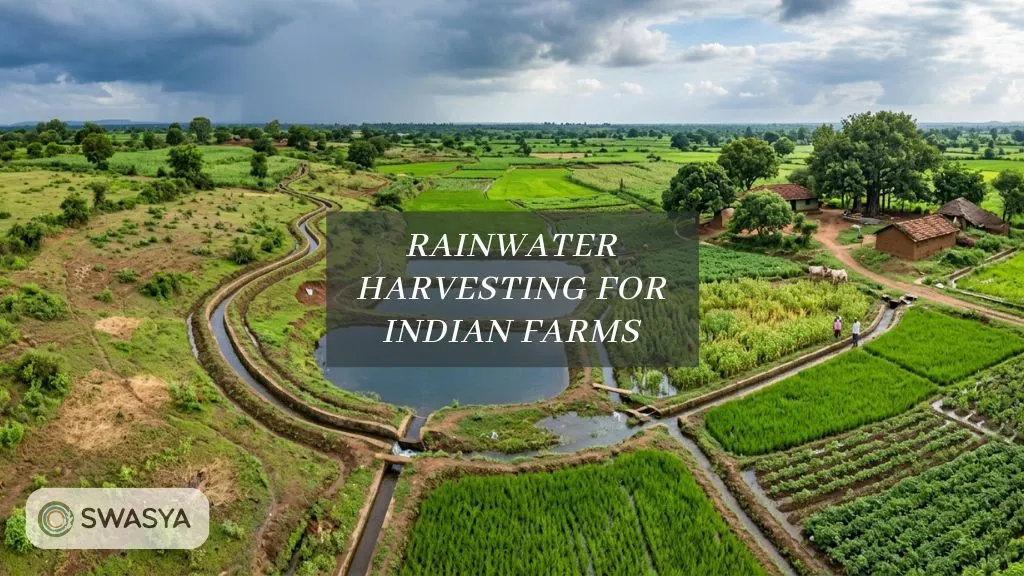
I was standing at the edge of our estate last week during a heavy downpour, watching thousands of liters of water just... wash away. It’s heartbreaking when you think about it. We spend so much time worrying about the "next big drought," yet we let the solution literally slip through our fingers every time it rains.
It’s a bit like having a leaky bank account, it doesn't matter how much money (or rain) goes in if you don't have a way to save it.
With climate change and its impact on india becoming our daily reality, we can’t just rely on the old ways anymore. The importance of rainwater harvesting has moved from being a "nice-to-have" eco-project to a "must-have" survival tool for every Indian farm. At Swasya Living, we believe that catching the rain where it falls is the only way to future-proof our lands.
What Exactly is Rainwater Harvesting (RWH)?
Simply put, RWH is the practice of collecting and storing rainwater from rooftops, land surfaces, or catchments for later use. Instead of letting the water run off into the drains (taking your topsoil with it!), you direct it into tanks, ponds, or directly back into the ground to recharge your borewells.
What are the Benefits of Rainwater Harvesting
The advantages of rain water harvesting go way beyond just having a full tank of water. When you implement this on a farm scale, you are changing the entire local ecosystem.
The Benefit | How it Helps the Farm | Long-Term Impact |
Groundwater Recharge | Replaces what we pump out for crops. | Prevents borewells from going dry. |
Soil Moisture | Keeps the earth "damp" for longer. | Reduces the need for frequent irrigation. |
Flood Control | Reduces the "rush" of water during storms. | Prevents soil erosion and crop damage. |
Water Quality | Rainwater is naturally soft and chemical-free. | Better for sensitive crops and soil health. |
There are so many benefits of rainwater harvesting, but for us in India, the biggest one is self-sufficiency. You stop being at the mercy of the municipal supply or a failing water table.
How Rainwater Harvesting Works?
Modern technical changes in agriculture have given us some amazing tools, but many of the best rain water harvesting uses actually come from ancient Indian wisdom. Our ancestors were experts at this!
1. Rooftop Collection
This is the easiest way to start. By using gutters and downspouts on farm sheds or cottages, you can divert water into storage tanks. This water is perfect for cleaning, gardening, or even drinking (if you treat it right!).
2. On-Farm Reservoirs (Ponds)
At Swasya, we love farm ponds. They aren't just for storage; they create a microclimate. They attract birds, cool the air, and provide a backup during those long, dry Bangalore spells. This is one of the most practical rain water harvesting uses for large-scale managed farmlands.
3. Recharge Wells & Borewells
Instead of just taking water out of the ground, we use recharge pits to put water back in. This is crucial for fighting the impact of global warming on agriculture because it helps stabilize the water table for the entire neighborhood.
4. Contour Bunds and Trenches
On hilly terrain, we dig trenches along the contours of the land. This slows down the water, giving it time to "sink" into the soil rather than "run" off the surface. It’s a simple advantages of rain water harvesting technique that also saves your precious topsoil.
Common Mistakes to Avoid (And How to Fix Them)
The "First Flush" Miss: The first rain of the season usually brings down dust and bird droppings. You need a "first flush" diverter to ensure only the clean water goes into your tank.
Poor Maintenance: Gutters get clogged with leaves. A quick check once a month is all it takes to keep the system efficient.
Thinking It’s Too Costly: People think RWH is expensive. But when you compare the cost of a recharge pit to the cost of digging a new 1000-ft borewell because the old one went dry... the importance of rainwater harvesting becomes very clear, very fast!
The Swasya Vision: A Water-Positive Future
At Swasya Living, we don’t just see land as a financial asset; we see it as a living trust. For us, the importance of rainwater harvesting is woven into every project we manage. We’ve been quietly integrating recharge wells and contour trenches across our estates to ensure that our managed farm land remains a "green oasis" even when the rest of the region is struggling.
Whether it’s our desi ghee from cows that drink pure, harvested water or our shade-grown coffee that thrives on deep soil moisture, everything we produce is a result of working with the rain, not against it. We handle the technical expertise and the labor, so your investment stays water-secure for generations.
Every Drop Counts
The "Catch the Rain" slogan isn't just a government catchphrase, it’s a roadmap for the future of India. We cannot control climate change and its impact on india, but we can control how we manage the resources we have.
By embracing the benefits of rainwater harvesting, we turn a potential crisis into a sustainable opportunity. It’s about being "Water Wise" today so we can be "Water Wealthy" tomorrow.
FAQs
1: Is rainwater safe for my crops?
Absolutely! In fact, it’s often better than borewell water because it doesn't have the high salt/mineral content that can sometimes "crust" the soil.
2: How much water can I really save?
You’d be surprised! A 1,000 sq. ft. roof can catch about 2,000 liters of water from just one inch of rain. Over a full bangalore monsoon season, that’s tens of thousands of liters!
3: Does RWH help with the effect of climate change on agriculture in india?
Yes. It acts as a "buffer." When the rains are unpredictable, your stored water and recharged groundwater keep your crops alive during the dry gaps.
4: Which one is the best option, storage tanks or ground recharge?
Ideally, both! Tanks give you immediate water for daily use, while recharge pits provide long-term security for your land's future.
I was standing at the edge of our estate last week during a heavy downpour, watching thousands of liters of water just... wash away. It’s heartbreaking when you think about it. We spend so much time worrying about the "next big drought," yet we let the solution literally slip through our fingers every time it rains.
It’s a bit like having a leaky bank account, it doesn't matter how much money (or rain) goes in if you don't have a way to save it.
With climate change and its impact on india becoming our daily reality, we can’t just rely on the old ways anymore. The importance of rainwater harvesting has moved from being a "nice-to-have" eco-project to a "must-have" survival tool for every Indian farm. At Swasya Living, we believe that catching the rain where it falls is the only way to future-proof our lands.
What Exactly is Rainwater Harvesting (RWH)?
Simply put, RWH is the practice of collecting and storing rainwater from rooftops, land surfaces, or catchments for later use. Instead of letting the water run off into the drains (taking your topsoil with it!), you direct it into tanks, ponds, or directly back into the ground to recharge your borewells.
What are the Benefits of Rainwater Harvesting
The advantages of rain water harvesting go way beyond just having a full tank of water. When you implement this on a farm scale, you are changing the entire local ecosystem.
The Benefit | How it Helps the Farm | Long-Term Impact |
Groundwater Recharge | Replaces what we pump out for crops. | Prevents borewells from going dry. |
Soil Moisture | Keeps the earth "damp" for longer. | Reduces the need for frequent irrigation. |
Flood Control | Reduces the "rush" of water during storms. | Prevents soil erosion and crop damage. |
Water Quality | Rainwater is naturally soft and chemical-free. | Better for sensitive crops and soil health. |
There are so many benefits of rainwater harvesting, but for us in India, the biggest one is self-sufficiency. You stop being at the mercy of the municipal supply or a failing water table.
How Rainwater Harvesting Works?
Modern technical changes in agriculture have given us some amazing tools, but many of the best rain water harvesting uses actually come from ancient Indian wisdom. Our ancestors were experts at this!
1. Rooftop Collection
This is the easiest way to start. By using gutters and downspouts on farm sheds or cottages, you can divert water into storage tanks. This water is perfect for cleaning, gardening, or even drinking (if you treat it right!).
2. On-Farm Reservoirs (Ponds)
At Swasya, we love farm ponds. They aren't just for storage; they create a microclimate. They attract birds, cool the air, and provide a backup during those long, dry Bangalore spells. This is one of the most practical rain water harvesting uses for large-scale managed farmlands.
3. Recharge Wells & Borewells
Instead of just taking water out of the ground, we use recharge pits to put water back in. This is crucial for fighting the impact of global warming on agriculture because it helps stabilize the water table for the entire neighborhood.
4. Contour Bunds and Trenches
On hilly terrain, we dig trenches along the contours of the land. This slows down the water, giving it time to "sink" into the soil rather than "run" off the surface. It’s a simple advantages of rain water harvesting technique that also saves your precious topsoil.
Common Mistakes to Avoid (And How to Fix Them)
The "First Flush" Miss: The first rain of the season usually brings down dust and bird droppings. You need a "first flush" diverter to ensure only the clean water goes into your tank.
Poor Maintenance: Gutters get clogged with leaves. A quick check once a month is all it takes to keep the system efficient.
Thinking It’s Too Costly: People think RWH is expensive. But when you compare the cost of a recharge pit to the cost of digging a new 1000-ft borewell because the old one went dry... the importance of rainwater harvesting becomes very clear, very fast!
The Swasya Vision: A Water-Positive Future
At Swasya Living, we don’t just see land as a financial asset; we see it as a living trust. For us, the importance of rainwater harvesting is woven into every project we manage. We’ve been quietly integrating recharge wells and contour trenches across our estates to ensure that our managed farm land remains a "green oasis" even when the rest of the region is struggling.
Whether it’s our desi ghee from cows that drink pure, harvested water or our shade-grown coffee that thrives on deep soil moisture, everything we produce is a result of working with the rain, not against it. We handle the technical expertise and the labor, so your investment stays water-secure for generations.
Every Drop Counts
The "Catch the Rain" slogan isn't just a government catchphrase, it’s a roadmap for the future of India. We cannot control climate change and its impact on india, but we can control how we manage the resources we have.
By embracing the benefits of rainwater harvesting, we turn a potential crisis into a sustainable opportunity. It’s about being "Water Wise" today so we can be "Water Wealthy" tomorrow.
FAQs
1: Is rainwater safe for my crops?
Absolutely! In fact, it’s often better than borewell water because it doesn't have the high salt/mineral content that can sometimes "crust" the soil.
2: How much water can I really save?
You’d be surprised! A 1,000 sq. ft. roof can catch about 2,000 liters of water from just one inch of rain. Over a full bangalore monsoon season, that’s tens of thousands of liters!
3: Does RWH help with the effect of climate change on agriculture in india?
Yes. It acts as a "buffer." When the rains are unpredictable, your stored water and recharged groundwater keep your crops alive during the dry gaps.
4: Which one is the best option, storage tanks or ground recharge?
Ideally, both! Tanks give you immediate water for daily use, while recharge pits provide long-term security for your land's future.
Akshata
You Might Also Like




Subscribe to the Swasya
newsletter
Discover insights about sustainable farming, investment opportunities, and the future of agriculture.
By subscribing, you agree to the Privacy Policy
Subscribe to the Swasya
newsletter
Discover insights about sustainable farming, investment opportunities, and the future of agriculture.
By subscribing, you agree to the Privacy Policy