Agriculture
Khata Transfer for Agricultural Land in Karnataka: What Buyers Should Know?
16 Apr 2026
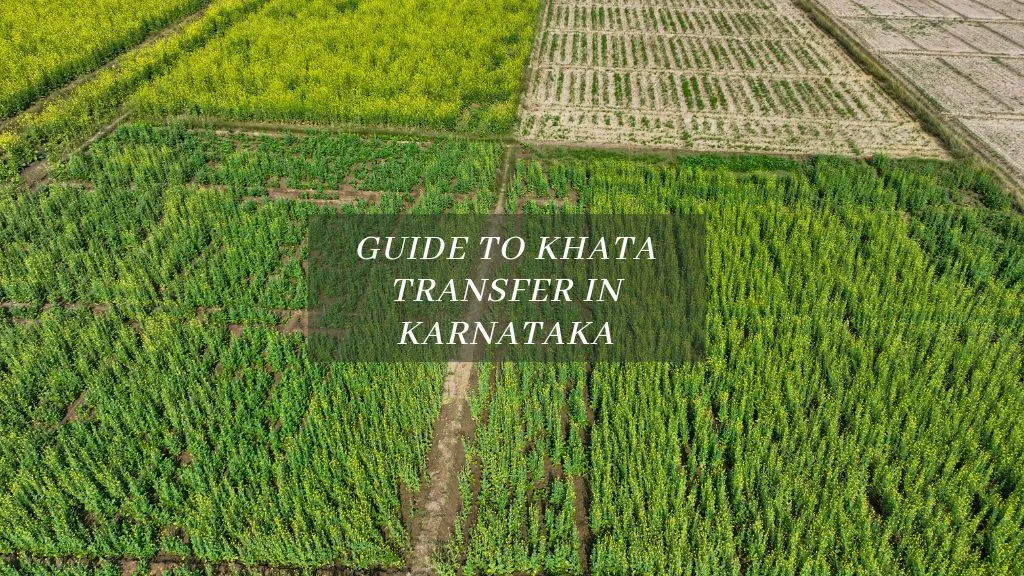
So, you finally took the plunge and bought that dream patch of agriculture land in Karnataka. Congratulations! You’ve got the Sale Deed registered, you’ve got the keys (or the gate remote), and you’re probably already dreaming about where the mango trees will go.
But now most people think the job is done once they leave the Sub-Registrar's office. It’s not. There’s a crucial "last mile" step that often gets ignored until it’s too late: the Khata transfer.
I’ve seen so many owners realize years later that while they "own" the land on paper, the tax records still show the old owner's name. It’s a headache you don’t want. Today, I’m breaking down the khata transfer process specifically for agricultural land so you can secure your investment once and for all.
What exactly is a Khata, and why do you need it?
Think of the Sale Deed as your proof of ownership, but the Khata transfer is what tells the government, "Hey, I’m the one responsible for the taxes now." In Karnataka, a Khata is basically an account that records your property details in the revenue records.
Without a khata transfer, you’ll face issues with:
Getting a farm loan or mortgage.
Selling the property in the future (no buyer will touch it without an updated Khata).
Obtaining electricity connections or building a farmhouse.
Updating the RTC (Pahani) records
The 2026 Reality: Types of Khata in Karnataka
Khata Type | Legal Status | What it means for you |
A Khata | Fully Legal | Property has all approvals. You can get bank loans easily. |
B Khata | Recorded but Pending | Property lacks some approvals. You can pay tax, but loans are harder. |
Note: For pure agriculture land in Karnataka, we usually deal with Mutation and RTC (Pahani) updates at the Taluk level, which acts as the 'Khata' for rural land.
Step-by-Step: The Khata Transfer Process
The khata transfer process isn’t as scary as it sounds, but it does take time (usually 30 to 60 days). Here is how it works:
Preparation: Gather all your documents required for khata transfer. Don't miss even one, or the revenue office will send you back.
Application Submission: You need to apply at the local Sakala center or the Tehsildar/Panchayat office depending on where your land is.
Verification: A revenue inspector will verify the documents and might even do a site visit to check the boundaries.
Payment of Fees: Once verified, you pay the khata transfer fee.
Issuance: You receive the Khata Certificate and the Khata Extract in your name.
Essential Documents Required for Khata Transfer
If you want to avoid multiple trips to the office, keep this checklist ready. These are the "Big 5" documents required for khata transfer:
Registered Sale Deed: The original (for verification) and attested copies.
Encumbrance Certificate (EC): Usually for the last 13 to 30 years to show a clear title.
Latest Tax Paid Receipts: Make sure the previous owner has cleared all dues.
Previous Khata Certificate: To show the chain of ownership.
Identity Proof: Your Aadhaar card and PAN card.
The "Agricultural" Twist: Mutation vs. Khata
When we talk about agriculture land in Karnataka, the process is slightly different from city sites. After you pay the agriculture land registration charges in Karnataka, the sub-registrar automatically triggers a "J-Slip" to the Tehsildar office.
This starts the Mutation process. Mutation is the actual "Khata" of the village world. It updates the RTC (Record of Rights, Tenancy, and Crops). Always check your RTC 45 days after registration. If your name isn't there, you need to follow up on the mutation immediately.
Costs Involved: Registration & Transfer
Let’s talk money. Buying land involves more than just the price of the plot. You need to account for the government's share:
Fee Component | Current Rate (2026) |
Stamp Duty | 5% of the transaction value |
Registration Charges | 1% of the transaction value |
Khata Transfer Fee | Usually 2% of the property value (for urban) or a fixed fee (for rural) |
Many people try to save money by under-reporting the value, but I wouldn't recommend it. With the agriculture land registration charges in Karnataka being strictly monitored via guidance values, it's better to stay clean.
Important: The 2020 Amendment and Your Khata
Back in the day, only "farmers" could buy agriculture land in Karnataka. Since the 2020 amendment, anyone can buy it. However, the khata transfer still requires you to prove you haven't exceeded the "ceiling limit" (how much land one person can own).
Individual Limit: 10 units.
Family Limit: 20 units.
If you exceed this, your khata transfer process will be rejected, and the government can even reclaim the land. Always check your total holdings before buying more!
Final Thoughts
At Swasya Living, we tell our community members that the "real" ownership starts when your name reflects in the RTC and Khata. It’s the final seal of security on your agriculture land in Karnataka.
If the paperwork feels too heavy, there are services or local consultants who can help, but knowing the khata transfer process yourself is always better. It keeps you in control.
FAQs
1. Can I get the tax receipt in my name without a Khata?
No. To update the tax records, a khata transfer is mandatory. If you’re paying tax in the old owner's name, you aren't fully protected.
2. How long does the whole process take?
Usually 30-45 days. If it takes longer, check if there’s an objection filed against your mutation.
3. Should I wait for the physical possession of the land?
No! Start the khata transfer as soon as the registration is done. Ownership in the records is just as important as the fence around your land.
So, you finally took the plunge and bought that dream patch of agriculture land in Karnataka. Congratulations! You’ve got the Sale Deed registered, you’ve got the keys (or the gate remote), and you’re probably already dreaming about where the mango trees will go.
But now most people think the job is done once they leave the Sub-Registrar's office. It’s not. There’s a crucial "last mile" step that often gets ignored until it’s too late: the Khata transfer.
I’ve seen so many owners realize years later that while they "own" the land on paper, the tax records still show the old owner's name. It’s a headache you don’t want. Today, I’m breaking down the khata transfer process specifically for agricultural land so you can secure your investment once and for all.
What exactly is a Khata, and why do you need it?
Think of the Sale Deed as your proof of ownership, but the Khata transfer is what tells the government, "Hey, I’m the one responsible for the taxes now." In Karnataka, a Khata is basically an account that records your property details in the revenue records.
Without a khata transfer, you’ll face issues with:
Getting a farm loan or mortgage.
Selling the property in the future (no buyer will touch it without an updated Khata).
Obtaining electricity connections or building a farmhouse.
Updating the RTC (Pahani) records
The 2026 Reality: Types of Khata in Karnataka
Khata Type | Legal Status | What it means for you |
A Khata | Fully Legal | Property has all approvals. You can get bank loans easily. |
B Khata | Recorded but Pending | Property lacks some approvals. You can pay tax, but loans are harder. |
Note: For pure agriculture land in Karnataka, we usually deal with Mutation and RTC (Pahani) updates at the Taluk level, which acts as the 'Khata' for rural land.
Step-by-Step: The Khata Transfer Process
The khata transfer process isn’t as scary as it sounds, but it does take time (usually 30 to 60 days). Here is how it works:
Preparation: Gather all your documents required for khata transfer. Don't miss even one, or the revenue office will send you back.
Application Submission: You need to apply at the local Sakala center or the Tehsildar/Panchayat office depending on where your land is.
Verification: A revenue inspector will verify the documents and might even do a site visit to check the boundaries.
Payment of Fees: Once verified, you pay the khata transfer fee.
Issuance: You receive the Khata Certificate and the Khata Extract in your name.
Essential Documents Required for Khata Transfer
If you want to avoid multiple trips to the office, keep this checklist ready. These are the "Big 5" documents required for khata transfer:
Registered Sale Deed: The original (for verification) and attested copies.
Encumbrance Certificate (EC): Usually for the last 13 to 30 years to show a clear title.
Latest Tax Paid Receipts: Make sure the previous owner has cleared all dues.
Previous Khata Certificate: To show the chain of ownership.
Identity Proof: Your Aadhaar card and PAN card.
The "Agricultural" Twist: Mutation vs. Khata
When we talk about agriculture land in Karnataka, the process is slightly different from city sites. After you pay the agriculture land registration charges in Karnataka, the sub-registrar automatically triggers a "J-Slip" to the Tehsildar office.
This starts the Mutation process. Mutation is the actual "Khata" of the village world. It updates the RTC (Record of Rights, Tenancy, and Crops). Always check your RTC 45 days after registration. If your name isn't there, you need to follow up on the mutation immediately.
Costs Involved: Registration & Transfer
Let’s talk money. Buying land involves more than just the price of the plot. You need to account for the government's share:
Fee Component | Current Rate (2026) |
Stamp Duty | 5% of the transaction value |
Registration Charges | 1% of the transaction value |
Khata Transfer Fee | Usually 2% of the property value (for urban) or a fixed fee (for rural) |
Many people try to save money by under-reporting the value, but I wouldn't recommend it. With the agriculture land registration charges in Karnataka being strictly monitored via guidance values, it's better to stay clean.
Important: The 2020 Amendment and Your Khata
Back in the day, only "farmers" could buy agriculture land in Karnataka. Since the 2020 amendment, anyone can buy it. However, the khata transfer still requires you to prove you haven't exceeded the "ceiling limit" (how much land one person can own).
Individual Limit: 10 units.
Family Limit: 20 units.
If you exceed this, your khata transfer process will be rejected, and the government can even reclaim the land. Always check your total holdings before buying more!
Final Thoughts
At Swasya Living, we tell our community members that the "real" ownership starts when your name reflects in the RTC and Khata. It’s the final seal of security on your agriculture land in Karnataka.
If the paperwork feels too heavy, there are services or local consultants who can help, but knowing the khata transfer process yourself is always better. It keeps you in control.
FAQs
1. Can I get the tax receipt in my name without a Khata?
No. To update the tax records, a khata transfer is mandatory. If you’re paying tax in the old owner's name, you aren't fully protected.
2. How long does the whole process take?
Usually 30-45 days. If it takes longer, check if there’s an objection filed against your mutation.
3. Should I wait for the physical possession of the land?
No! Start the khata transfer as soon as the registration is done. Ownership in the records is just as important as the fence around your land.
Akshata
You Might Also Like



Subscribe to the Swasya
newsletter
Discover insights about sustainable farming, investment opportunities, and the future of agriculture.
By subscribing, you agree to the Privacy Policy
Subscribe to the Swasya
newsletter
Discover insights about sustainable farming, investment opportunities, and the future of agriculture.
By subscribing, you agree to the Privacy Policy