Farming
What is a Drip Irrigation System? Cost per acre, Subsidy & Installation
31 Dec 2025
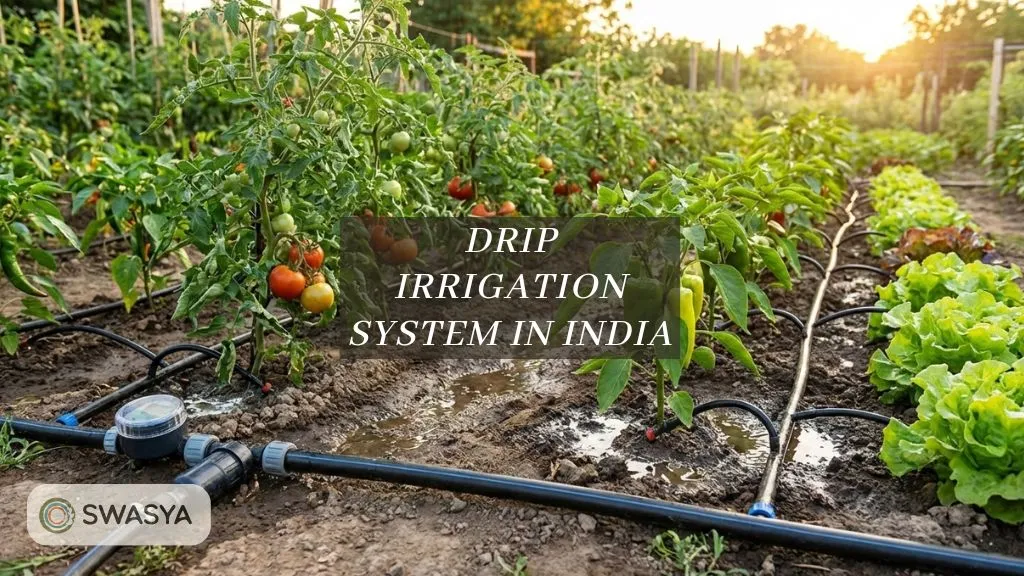
If you’ve ever stood in a field and felt bad watching water just… disappear into the soil, you’ll get why drip irrigation makes sense. I’ve seen farmers switch to a drip irrigation system and instantly talk about water saved, crops happier, and effort reduced. From drip irrigation cost per acre to the 1 acre drip irrigation price, let’s break it down everything.
What Is a Drip Irrigation System?
A drip irrigation system is basically water being given slowly, gently, exactly where the plant needs it. No flooding. No wastage.
Water moves through small pipes and tubes and reaches the plant root area drop by drop. That’s it. This method is also called micro irrigation or trickle irrigation, and honestly, once you see it working, surface irrigation feels a bit outdated.
I’ve seen farms where water scarcity was a daily headache. After drip irrigation came in, things changed. Less water used. Healthier crops. And farmers were not running behind pumps all day. The biggest win? Almost 50–70% water saving compared to traditional methods.
It works best when water is limited, soil isn’t perfect, labour is expensive, or crops are high-value. Basically, real-life Indian farming conditions.
How Does a Drip Irrigation System Work in Farming?
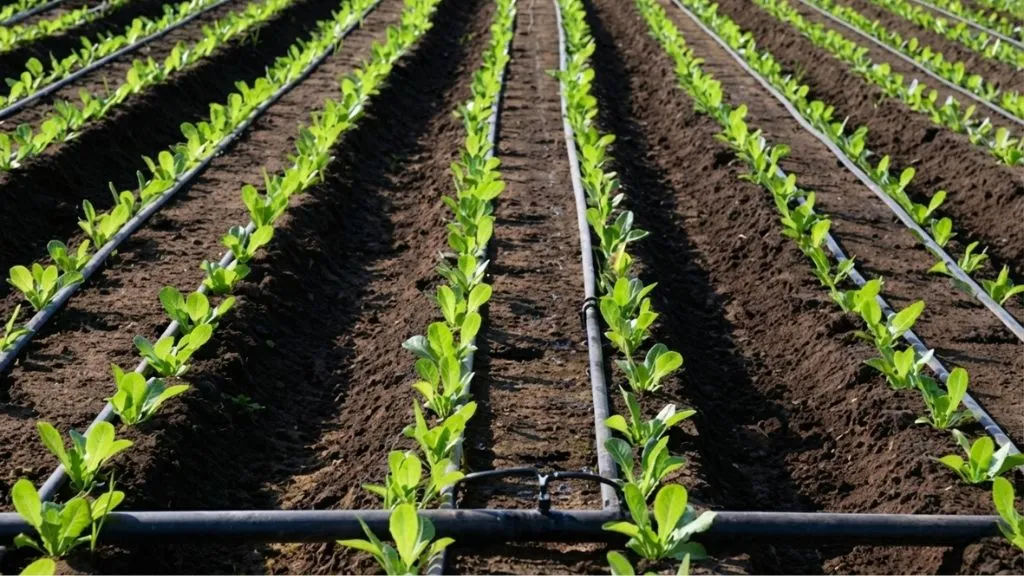
A drip irrigation system works in a very controlled way. Water moves from the source through pipes, then into small tubes, and finally reaches the plant roots through tiny outlets called emitters.
Instead of flooding the whole field, water is released slowly, drop by drop, exactly where the plant needs it. This keeps the soil moist without wasting water. Less evaporation. Less runoff. Plants stay happy, roots stay strong, and water isn’t wasted like in traditional irrigation.
Why Do Farmers Prefer Drip Irrigation System in India?
Because it saves water. And water is everything now. With drip irrigation, water goes straight to the roots. Not to weeds. Not to empty soil. Just the crop. So farmers see less water usage, less electricity bills, and better crop growth.
Fertilizers can also be mixed with water, so nutrients reach evenly. Labour reduces. Yield improves. And honestly, once it’s installed, life becomes a little easier. Especially in dry regions, drip irrigation feels less like an option and more like a necessity these days.
Advantages of Drip Irrigation System in Agriculture
Let me put this simply, from what I’ve seen and understood over time. Drip irrigation just makes sense.
Huge water saving. Almost 50–70% less water compared to traditional methods. Water goes straight to the roots.
Better crop growth. Plants get water slowly and regularly, so stress is less. Crops look healthier, yields improve.
Fertilizer savings. Fertilizers can be mixed with water and given directly. Nothing gets washed away. Money saved there too.
Less weed problem. Since water isn’t spread everywhere, weeds don’t get much chance to grow.
Works even on uneven land. Slopes, rocky patches, small plots—drip still works fine.
Lower labour requirement. Once installed, very little manual work is needed.
Good for high-value crops. Fruits, vegetables, plantations, this system really shines there.
Honestly, once farmers switch, most don’t feel like going back.
Disadvantages & Limitations of Drip Irrigation System
Drip irrigation is great, no doubt. But ya, it’s not all perfect-perfect.
Initial cost feels heavy – At first, the setup cost looks scary, especially for small farmers. Even if subsidy comes later, the upfront money is needed.
Clogging issues – This is the biggest headache. If water isn’t filtered properly, emitters get blocked by mud, salts, or fertilizer particles. Then half the crop stays thirsty.
Needs regular maintenance – Pipes, filters, valves… everything needs checking. If ignored, system efficiency drops quietly.
Damage by rodents or animals – In open fields, pipes can get bitten or damaged. Happens more often than we admit.
Salt build-up in soil – If irrigation gaps are long, salts can accumulate near roots, affecting plant growth.
So yes, drip irrigation works beautifully, but only when it’s cared for properly. Like most good things in farming, it demands attention.
Main Components of a Drip Irrigation System
This is the part most farmers ask me about first. “Ok fine, drip saves water… but what all actually goes into it?” So here it is.
Water source – could be a borewell, open well, pond, or tank.
Pump – pushes water into the system with controlled pressure.
Filter unit – very important. Removes sand, silt, algae. If this fails, clogging starts. I’ve seen it happen.
Pressure regulator – keeps water flow steady. Drip hates high pressure.
Mainline & sub-main pipes – carry water from source to field sections.
Drip laterals (pipes) – these run close to plants.
Emitters / drippers – the real heroes. Water comes drop by drop, right near roots.
End caps / flush valves – used to clean the lines once in a while.
Fittings & connectors – small parts, but without them nothing fits properly.
That’s it. Looks long on paper, but on the field, it’s actually very practical once installed.
Drip Irrigation Cost per Acre in India | Installation Cost of Drip Irrigation
Okay, now the part most farmers wanna know: “How much will this cost me?” we get asked this so many times in Sakleshpur and even from friends around Bangalore.
Setup cost varies based on your land type, water source, and quality of parts you choose. But to give you a practical idea, for 1 acre drip irrigation, the total investment comes around ₹45,000 to ₹60,000 roughly.
Let me break it down for you, roughly:
Water Source: ₹1,500 – ₹12,000 (depends if you’re digging a well or just using an existing one)
Pump: ₹200 – ₹800
Filter: ₹20 – ₹200
Pressure Regulator: ₹10 – ₹50
Mainline + Tubing: ₹200 – ₹4,000
Emitters: ₹200 – ₹4,000
Fittings/Connectors/Micro Tubing/Stakes: ₹200 – ₹4,000
Add it all up, and you’re around that 45–60k range per acre. Again, this is normal range, not super high‑end, not super cheap.
Now, you might think, “That’s a chunk of money for a small farmer.” Well, don’t worry, I’m coming to subsidies next which make this way easier.
Government Subsidy for Drip Irrigation in India
Yes, the drip irrigation cost per acre can look scary at first, but the good thing is Government subsidies make it much easier on your pocket. I’ve seen many farmers in Sakleshpur and near Bangalore light up when they hear about this help!
The government basically says, “Hey, let’s share this cost with you” especially for small and marginal farmers. So here’s how it works in reality (rough idea, because it does vary state to state):
If you are a small or marginal farmer, you can get around 35% subsidy on the total installation cost. That’s like getting a big chunk of the cost back!
In certain drought‑prone or special regions (like NE & Himalayan or DPAP/DDP zones), this can go up to 50% for small farmers.
For other farmers (not in special zones), help is usually around 25–35% of the cost.
On top of that, some states offer an extra 10% assistance, which is like extra icing on the cake.
There’s also a cap on subsidy per hectare or acre, and government schemes sometimes limit it to about 5 hectares per farmer or group, but still, this support brings the effective cost down a lot.
So trust me, drip irrigation becomes much more affordable once you factor in the scholarship help from the government. It’s like they say, water saving + money saving = happy farmer!
Wrapping It Up
Honestly, if you’re serious about farming, especially in places like Karnataka where water can sometimes play hard to get, drip irrigation is a total game-changer. I’ve seen small farmers here completely transform their yields and feel less stressed about water shortages. Yes, the upfront drip irrigation system price may look steep, but with government subsidies and long-term water savings, it’s worth every rupee.
Whether you’re planning 1 acre drip irrigation or a bigger plot, the system saves water, reduces labor, and makes crops healthier. At Swasya Living, we encourage sustainable farming practices like this — it’s not just about growing plants, it’s about smart, future-proof farming that respects nature.
So, if you’ve been wondering whether to invest in drip irrigation, I’d say go for it, your farm, your crops, and the environment will all thank you!
FAQs
1: What exactly is a drip irrigation system?
It’s basically a way to water your crops slowly, drop by drop, right at the roots. Saves water, saves time, and keeps plants happy.
2: How much does drip irrigation cost per acre?
From my experience, it usually ranges around ₹45,000 to ₹60,000 per acre. Depends on land, crops, and components, but it’s worth it.
3: Can I get any subsidy for drip irrigation?
Yes! The government supports farmers. Small and marginal farmers get up to 50% in some regions. Makes the investment much easier.
4: Why is drip irrigation better than regular watering?
Honestly, it saves 50-70% water, reduces labor, and keeps plants healthier. I’ve seen the difference myself, crops just grow better.
5: Is it hard to maintain?
Not really, but you have to check pipes and filters regularly. Little care goes a long way, and the benefits are huge.
If you’ve ever stood in a field and felt bad watching water just… disappear into the soil, you’ll get why drip irrigation makes sense. I’ve seen farmers switch to a drip irrigation system and instantly talk about water saved, crops happier, and effort reduced. From drip irrigation cost per acre to the 1 acre drip irrigation price, let’s break it down everything.
What Is a Drip Irrigation System?
A drip irrigation system is basically water being given slowly, gently, exactly where the plant needs it. No flooding. No wastage.
Water moves through small pipes and tubes and reaches the plant root area drop by drop. That’s it. This method is also called micro irrigation or trickle irrigation, and honestly, once you see it working, surface irrigation feels a bit outdated.
I’ve seen farms where water scarcity was a daily headache. After drip irrigation came in, things changed. Less water used. Healthier crops. And farmers were not running behind pumps all day. The biggest win? Almost 50–70% water saving compared to traditional methods.
It works best when water is limited, soil isn’t perfect, labour is expensive, or crops are high-value. Basically, real-life Indian farming conditions.
How Does a Drip Irrigation System Work in Farming?
A drip irrigation system works in a very controlled way. Water moves from the source through pipes, then into small tubes, and finally reaches the plant roots through tiny outlets called emitters.
Instead of flooding the whole field, water is released slowly, drop by drop, exactly where the plant needs it. This keeps the soil moist without wasting water. Less evaporation. Less runoff. Plants stay happy, roots stay strong, and water isn’t wasted like in traditional irrigation.
Why Do Farmers Prefer Drip Irrigation System in India?
Because it saves water. And water is everything now. With drip irrigation, water goes straight to the roots. Not to weeds. Not to empty soil. Just the crop. So farmers see less water usage, less electricity bills, and better crop growth.
Fertilizers can also be mixed with water, so nutrients reach evenly. Labour reduces. Yield improves. And honestly, once it’s installed, life becomes a little easier. Especially in dry regions, drip irrigation feels less like an option and more like a necessity these days.
Advantages of Drip Irrigation System in Agriculture
Let me put this simply, from what I’ve seen and understood over time. Drip irrigation just makes sense.
Huge water saving. Almost 50–70% less water compared to traditional methods. Water goes straight to the roots.
Better crop growth. Plants get water slowly and regularly, so stress is less. Crops look healthier, yields improve.
Fertilizer savings. Fertilizers can be mixed with water and given directly. Nothing gets washed away. Money saved there too.
Less weed problem. Since water isn’t spread everywhere, weeds don’t get much chance to grow.
Works even on uneven land. Slopes, rocky patches, small plots—drip still works fine.
Lower labour requirement. Once installed, very little manual work is needed.
Good for high-value crops. Fruits, vegetables, plantations, this system really shines there.
Honestly, once farmers switch, most don’t feel like going back.
Disadvantages & Limitations of Drip Irrigation System
Drip irrigation is great, no doubt. But ya, it’s not all perfect-perfect.
Initial cost feels heavy – At first, the setup cost looks scary, especially for small farmers. Even if subsidy comes later, the upfront money is needed.
Clogging issues – This is the biggest headache. If water isn’t filtered properly, emitters get blocked by mud, salts, or fertilizer particles. Then half the crop stays thirsty.
Needs regular maintenance – Pipes, filters, valves… everything needs checking. If ignored, system efficiency drops quietly.
Damage by rodents or animals – In open fields, pipes can get bitten or damaged. Happens more often than we admit.
Salt build-up in soil – If irrigation gaps are long, salts can accumulate near roots, affecting plant growth.
So yes, drip irrigation works beautifully, but only when it’s cared for properly. Like most good things in farming, it demands attention.
Main Components of a Drip Irrigation System
This is the part most farmers ask me about first. “Ok fine, drip saves water… but what all actually goes into it?” So here it is.
Water source – could be a borewell, open well, pond, or tank.
Pump – pushes water into the system with controlled pressure.
Filter unit – very important. Removes sand, silt, algae. If this fails, clogging starts. I’ve seen it happen.
Pressure regulator – keeps water flow steady. Drip hates high pressure.
Mainline & sub-main pipes – carry water from source to field sections.
Drip laterals (pipes) – these run close to plants.
Emitters / drippers – the real heroes. Water comes drop by drop, right near roots.
End caps / flush valves – used to clean the lines once in a while.
Fittings & connectors – small parts, but without them nothing fits properly.
That’s it. Looks long on paper, but on the field, it’s actually very practical once installed.
Drip Irrigation Cost per Acre in India | Installation Cost of Drip Irrigation
Okay, now the part most farmers wanna know: “How much will this cost me?” we get asked this so many times in Sakleshpur and even from friends around Bangalore.
Setup cost varies based on your land type, water source, and quality of parts you choose. But to give you a practical idea, for 1 acre drip irrigation, the total investment comes around ₹45,000 to ₹60,000 roughly.
Let me break it down for you, roughly:
Water Source: ₹1,500 – ₹12,000 (depends if you’re digging a well or just using an existing one)
Pump: ₹200 – ₹800
Filter: ₹20 – ₹200
Pressure Regulator: ₹10 – ₹50
Mainline + Tubing: ₹200 – ₹4,000
Emitters: ₹200 – ₹4,000
Fittings/Connectors/Micro Tubing/Stakes: ₹200 – ₹4,000
Add it all up, and you’re around that 45–60k range per acre. Again, this is normal range, not super high‑end, not super cheap.
Now, you might think, “That’s a chunk of money for a small farmer.” Well, don’t worry, I’m coming to subsidies next which make this way easier.
Government Subsidy for Drip Irrigation in India
Yes, the drip irrigation cost per acre can look scary at first, but the good thing is Government subsidies make it much easier on your pocket. I’ve seen many farmers in Sakleshpur and near Bangalore light up when they hear about this help!
The government basically says, “Hey, let’s share this cost with you” especially for small and marginal farmers. So here’s how it works in reality (rough idea, because it does vary state to state):
If you are a small or marginal farmer, you can get around 35% subsidy on the total installation cost. That’s like getting a big chunk of the cost back!
In certain drought‑prone or special regions (like NE & Himalayan or DPAP/DDP zones), this can go up to 50% for small farmers.
For other farmers (not in special zones), help is usually around 25–35% of the cost.
On top of that, some states offer an extra 10% assistance, which is like extra icing on the cake.
There’s also a cap on subsidy per hectare or acre, and government schemes sometimes limit it to about 5 hectares per farmer or group, but still, this support brings the effective cost down a lot.
So trust me, drip irrigation becomes much more affordable once you factor in the scholarship help from the government. It’s like they say, water saving + money saving = happy farmer!
Wrapping It Up
Honestly, if you’re serious about farming, especially in places like Karnataka where water can sometimes play hard to get, drip irrigation is a total game-changer. I’ve seen small farmers here completely transform their yields and feel less stressed about water shortages. Yes, the upfront drip irrigation system price may look steep, but with government subsidies and long-term water savings, it’s worth every rupee.
Whether you’re planning 1 acre drip irrigation or a bigger plot, the system saves water, reduces labor, and makes crops healthier. At Swasya Living, we encourage sustainable farming practices like this — it’s not just about growing plants, it’s about smart, future-proof farming that respects nature.
So, if you’ve been wondering whether to invest in drip irrigation, I’d say go for it, your farm, your crops, and the environment will all thank you!
FAQs
1: What exactly is a drip irrigation system?
It’s basically a way to water your crops slowly, drop by drop, right at the roots. Saves water, saves time, and keeps plants happy.
2: How much does drip irrigation cost per acre?
From my experience, it usually ranges around ₹45,000 to ₹60,000 per acre. Depends on land, crops, and components, but it’s worth it.
3: Can I get any subsidy for drip irrigation?
Yes! The government supports farmers. Small and marginal farmers get up to 50% in some regions. Makes the investment much easier.
4: Why is drip irrigation better than regular watering?
Honestly, it saves 50-70% water, reduces labor, and keeps plants healthier. I’ve seen the difference myself, crops just grow better.
5: Is it hard to maintain?
Not really, but you have to check pipes and filters regularly. Little care goes a long way, and the benefits are huge.
Akshata
You Might Also Like




Subscribe to the Swasya
newsletter
Discover insights about sustainable farming, investment opportunities, and the future of agriculture.
By subscribing, you agree to the Privacy Policy
Subscribe to the Swasya
newsletter
Discover insights about sustainable farming, investment opportunities, and the future of agriculture.
By subscribing, you agree to the Privacy Policy