Farming
Top 10 Profitable Goat Breeds in India: Origin, Milk Yield, Weight
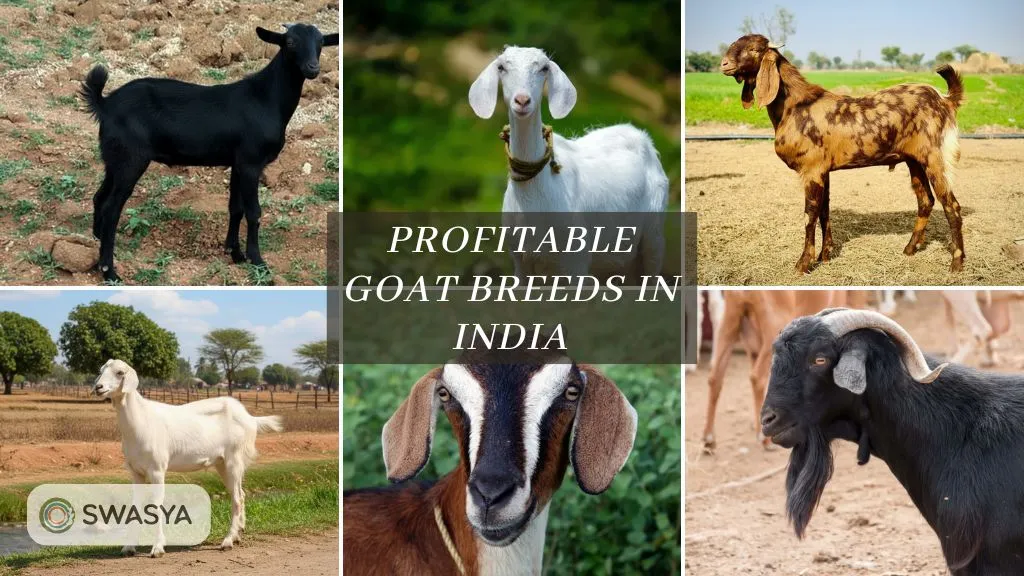
You know what’s fascinating- Goat farming in India isn’t just an age-old tradition. It’s turning into one of the smartest, most profitable agribusinesses today. And honestly, it makes sense. Goats are like the all-rounders of the livestock world. They give us milk, meat, manure, and even a steady source of income with very little fuss.
With so many different types of goat breeds in India, it sometimes gets confusing to know which ones actually make good business sense. I remember once visiting a small farm, the farmer there had just 15 Osmanabadi goats, yet his monthly profits were more than what many earn from acres of crop land! That’s when I realized, this is not just farming, this is smart farming.
From Jamunapari and Beetal to Black Bengal and Sirohi, India has some of the best goat breeds in India, each suited for different climates and purposes. In this blog, let’s walk through the top 10 goat breeds in India, and why goat farming is fast becoming a sustainable way of earning, especially for small farmers.
1. Jamunapari
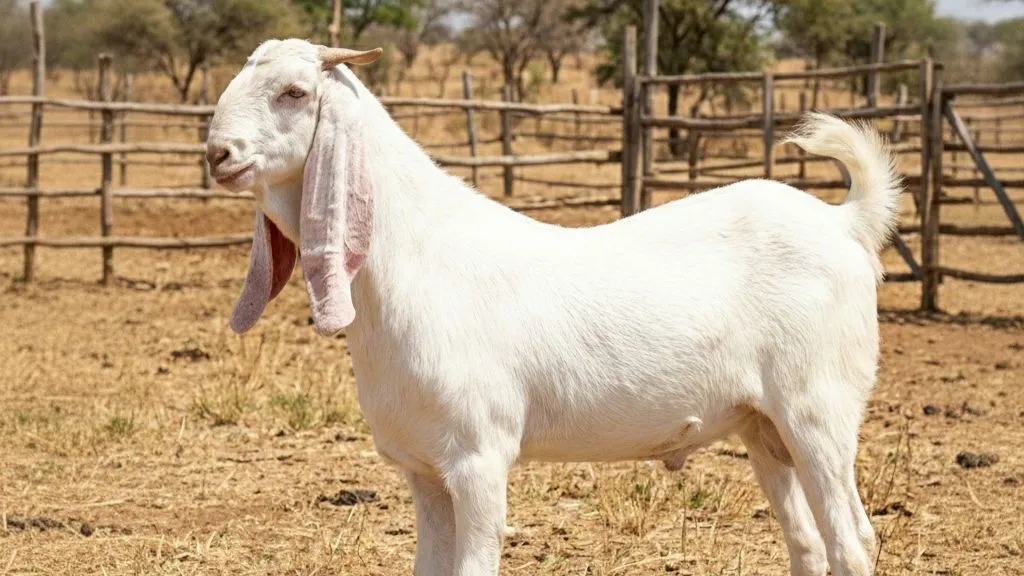
The Jamunapari, also lovingly called Totapari. Honestly, when you see this goat for the first time, you can’t help but be impressed. It’s the tallest goat breed in India, with long, elegant legs and those signature pendulous ears that just give it a regal look. I still remember visiting a farm in Etawah, Uttar Pradesh, and spotting a Jamunapari buck. It honestly looked like it belonged in a palace garden rather than a farm!
Native to the region between the Jamuna and Jambal rivers, these goats are mostly white or creamy, sometimes with light brown spots around their neck and face. Bucks weigh anywhere between 65–80 kg, while does are around 45–60 kg. The milk yield is decent too, about 2.25 to 2.75 kg per day.
What makes Jamunapari really special is their versatility. They’re used for cross-breeding to improve other local breeds, and of course, their meat is top-notch. If you’re looking for one of the best goat breeds in India for both meat and milk, trust me, Jamunapari tops the list.
2. Beetal
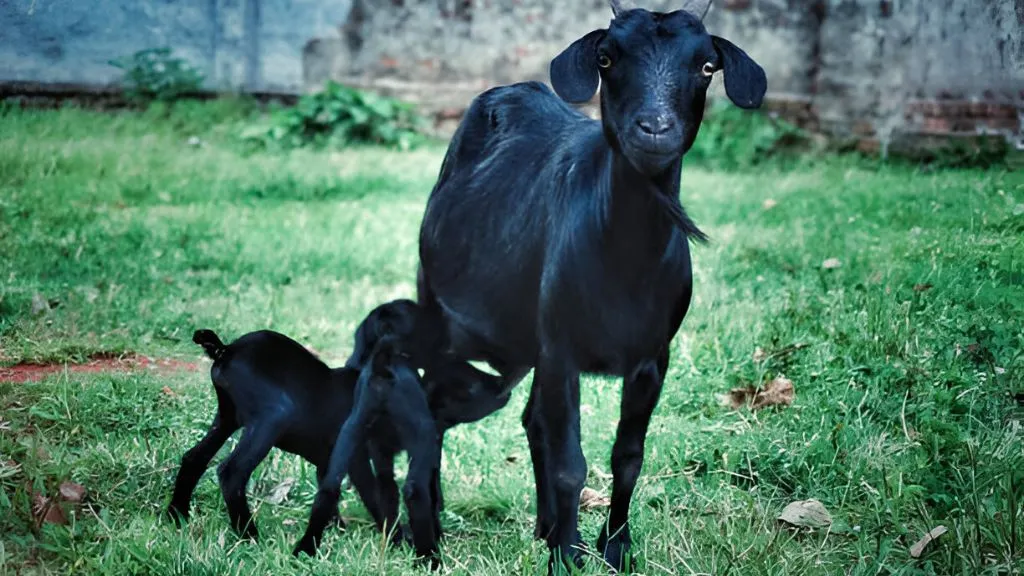
Origin: Punjab & Haryana
Coat & Appearance: Brown, black, or spotted; large body with droopy ears.
Weight: Bucks 65–75 kg, Does 40–50 kg
Milk Yield: Around 2–3 kg per day
Special Traits: Dual-purpose breed. Good for meat and milk; hardy and adapts well to Indian climates
The bucks are so calm yet impressive in size. They really feel like the “gentle giants” of Indian goat breeds.
3. Tellicherry (Also called Malabari)
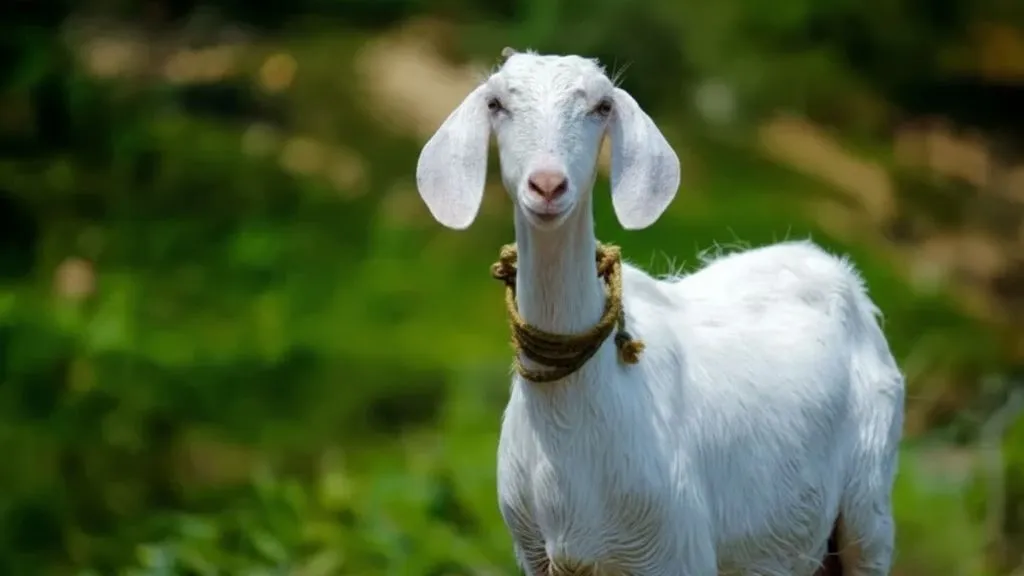
Origin: Kerala (Kozhikkode, Kannur, Malappuram districts)
Coat & Appearance: Color varies. white, black, or mixed; long-haired, elegant look
Weight: Bucks 50–60 kg, Does 30–40 kg
Milk Yield: 1–2 kg per day
Special Traits: Primarily reared for meat; skin is valued in the tanning industry; good reproductive performance (2–3 kids per birth)
Definitely a top choice if you’re thinking of meat production with decent milk too.
4. Attapady Black Goat
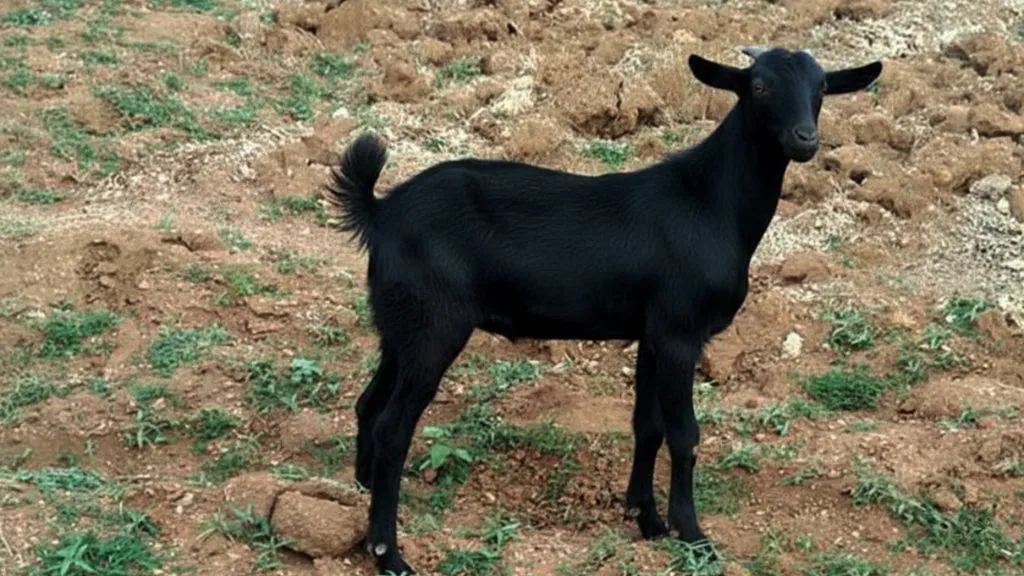
Origin: Kerala (Attapady region)
Coat & Appearance: Black, sometimes with white spots on the forehead; medium-sized, lean, long-legged; curved horns with backward-oriented tips.
Weight: Bucks 34 kg, Does 31 kg
Milk Yield: Poor milk yield; bowl-shaped udders with funnel shapes and pointed teats
Special Traits: Hardy and well-adapted to the local terrain; primarily reared for meat rather than milk; average birth weight is around 1.7 kg
Attapady Black goats may not give much milk, but their resilience and meat quality make them a reliable choice for farmers in the region.
5. Osmanabadi
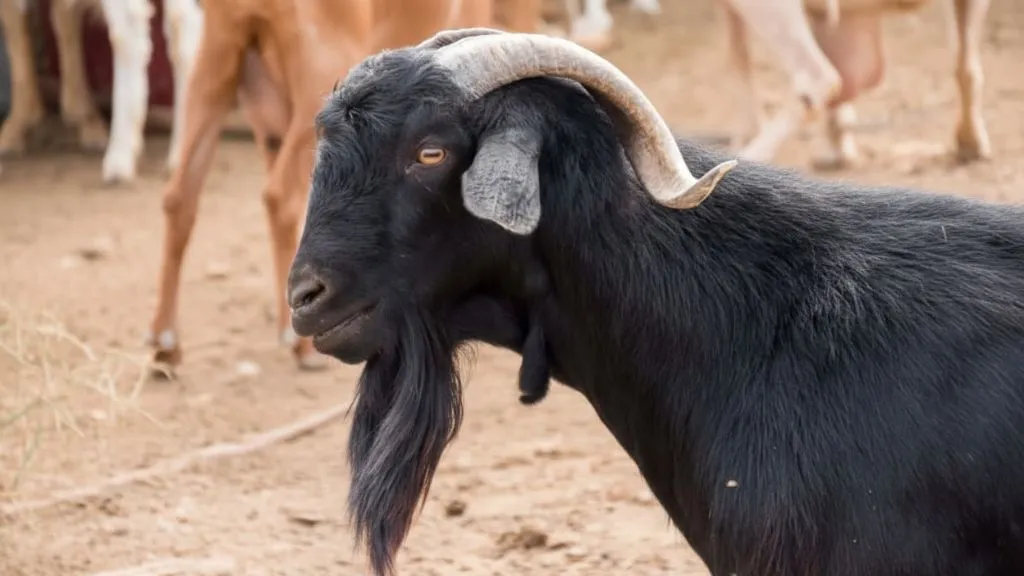
Origin: Maharashtra, mainly Osmanabad district
Coat & Appearance: Short-haired, usually white, sometimes with brown patches
Weight: Bucks 50–60 kg, Does 35–45 kg
Milk Yield: Around 1–1.5 kg per day
Special Traits: Highly adaptable to hot and dry climates; hardy and disease-resistant
I’ve always admired Osmanabadi goats for their toughness. They survive well even when feed is limited. Truly low-maintenance and perfect for small farmers who want reliable returns.
6. Sirohi
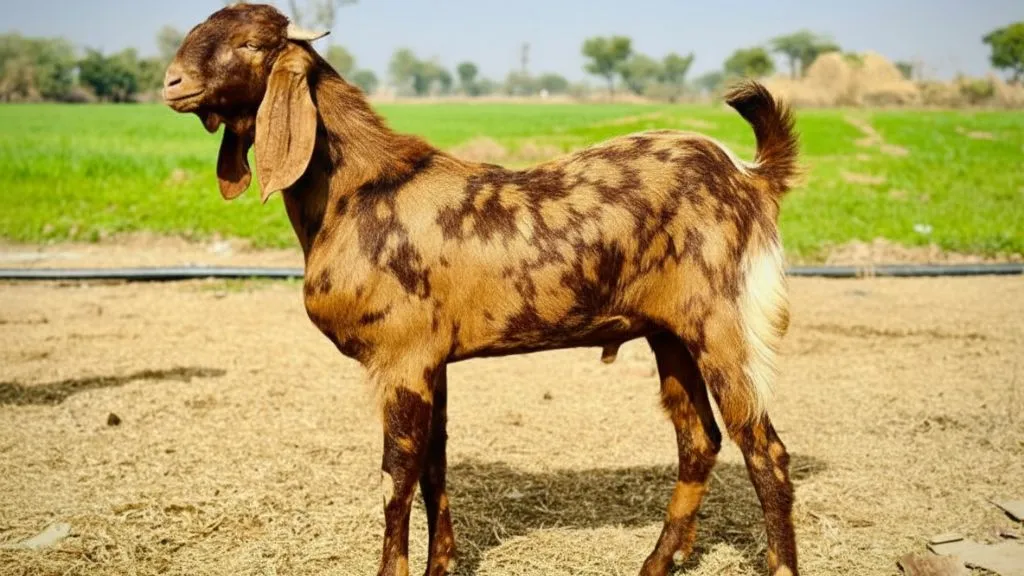
Origin: Rajasthan, especially Sirohi district
Coat & Appearance: Short-haired, light brown to grey; sturdy body
Weight: Bucks 45–55 kg, Does 30–40 kg
Milk Yield: 1–1.5 kg per day
Special Traits: Hardy and well-suited for arid regions; good reproductive efficiency
I remember visiting a small farm in Rajasthan where Sirohi goats were everywhere. So calm, so resilient. Perfect example of a breed that doesn’t demand much but gives steadily.
7. Malabari
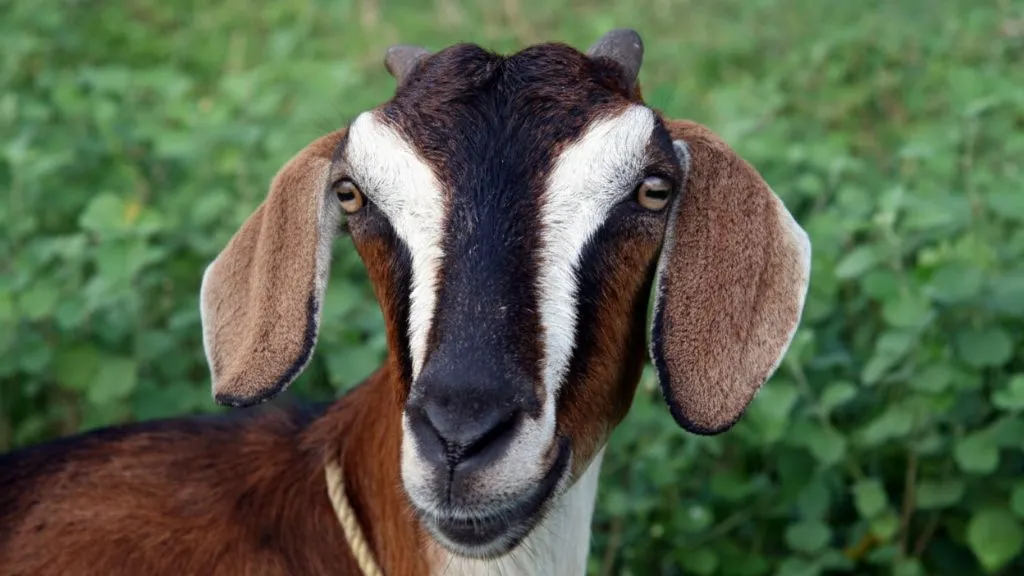
Origin: Kerala, mainly in Kozhikkode, Kannur, and Malappuram
Coat & Appearance: Varies from white to black; long-haired, elegant build
Weight: Bucks 50–60 kg, Does 30–40 kg
Milk Yield: 1–2 kg per day
Special Traits: Excellent meat quality, hardy, good reproductive capacity (2–3 kids per kidding)
8. Sangamneri
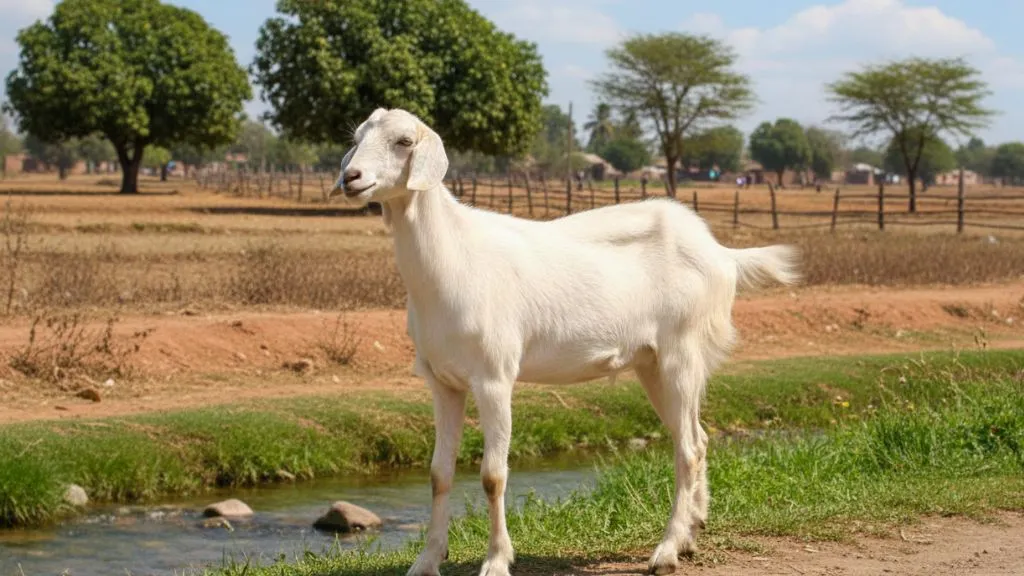
Origin: Maharashtra, primarily in Sangamner region
Coat & Appearance: Usually light brown to dark brown; medium-sized, sturdy build
Weight: Bucks 40–50 kg, Does 25–35 kg
Milk Yield: 1–2 kg per day
Special Traits: Hardy, well-adapted to semi-arid regions, great for meat production
9. Surti
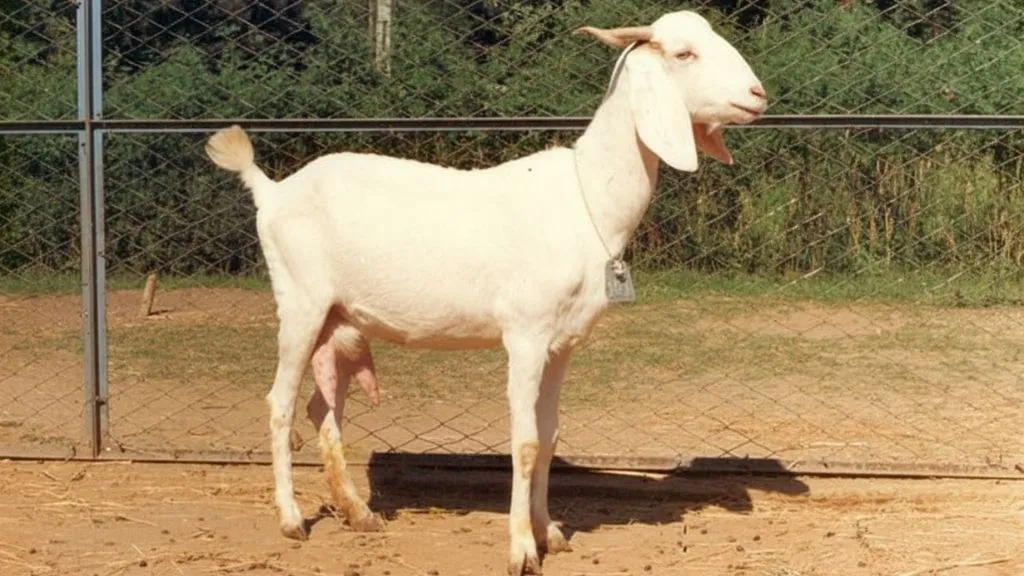
Origin: Gujarat, especially Surat region
Coat & Appearance: Light brown with darker shades on the head and back; medium-sized, compact body
Weight: Bucks 35–45 kg, Does 25–30 kg
Milk Yield: 1–1.5 kg per day
Special Traits: Known for its high milk-fat content, hardy in humid areas
10. Barbari
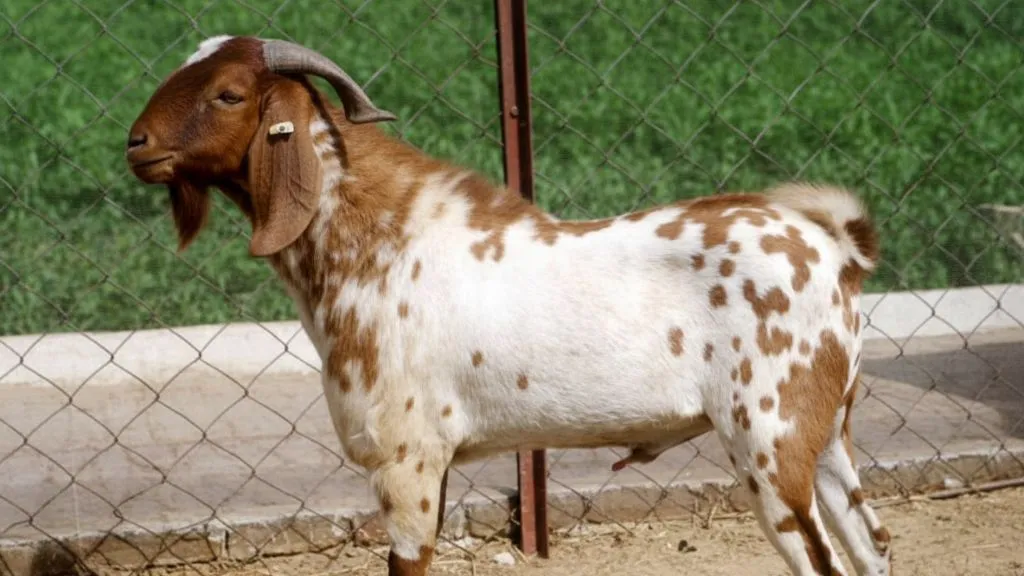
Origin: Uttar Pradesh and Rajasthan
Coat & Appearance: Short-haired, usually white with brown or black spots; small and compact body
Weight: Bucks 25–30 kg, Does 20–25 kg
Milk Yield: 1–1.2 kg per day
Special Traits: Fast-growing, early maturing, very good for meat production
Perfect for farmers wanting quick returns from meat.
Conclusion
So, here we are, at the end of our little journey through the top goat breeds in India. Honestly, whether you’re looking for meat, milk, or even both, these goats offer something special for every farmer. From the majestic Jamunapari to the hardy Osmanabadi, each breed has its own charm, and trust me, once you get hands-on with them, you’ll understand why farmers are so attached.
At Swasya, we love how farming connects us to nature. If you’re dreaming of setting up a small goat farm, or simply want a slice of rural life, our managed farmland in Karnataka and farm stay in Sakleshpur give you that perfect balance. Close enough to the city, yet deep into nature. Whether it’s cultivating crops, or enjoying quiet mornings on your plot, the experience is wholesome, sustainable, and totally rewarding.
Your farming journey doesn’t have to be complicated. It’s all about picking the right goats, giving them care, and connecting with the land. That’s what makes it truly enjoyable!
FAQs
1. What are the top 10 goat breeds in India?
Honestly, there are so many, but the ones I’d personally highlight are Jamunapari, Beetal, Malabari, Osmanabadi, Sirohi, Barbari, Tellicherry, Black Bengal, Changthangi, and Sangamneri. Each has its own charm and usefulness, some for milk, some for meat.
2. Which goat is best for meat in India?
If I’m thinking purely meat, I’d go with Beetal, Malabari, or Osmanabadi. They grow fast, give good weight, and are easy to rear for commercial purposes.
3. Which goat breed is best in India overall?
Honestly, Jamunapari. Hands down. They’re big, beautiful, and give decent milk too. Plus, they’re also amazing for cross-breeding programs.
4. How much milk does a Jamunapari goat give?
On average, around 2 to 2.5 kg per day. Some days more, some days less, depends on what you feed them!
5. How do I choose the right goat breed for my farm?
Think about your purpose first, milk, meat, or both. Then, check which breed suits your local climate. Also, don’t forget your budget and space.
You know what’s fascinating- Goat farming in India isn’t just an age-old tradition. It’s turning into one of the smartest, most profitable agribusinesses today. And honestly, it makes sense. Goats are like the all-rounders of the livestock world. They give us milk, meat, manure, and even a steady source of income with very little fuss.
With so many different types of goat breeds in India, it sometimes gets confusing to know which ones actually make good business sense. I remember once visiting a small farm, the farmer there had just 15 Osmanabadi goats, yet his monthly profits were more than what many earn from acres of crop land! That’s when I realized, this is not just farming, this is smart farming.
From Jamunapari and Beetal to Black Bengal and Sirohi, India has some of the best goat breeds in India, each suited for different climates and purposes. In this blog, let’s walk through the top 10 goat breeds in India, and why goat farming is fast becoming a sustainable way of earning, especially for small farmers.
1. Jamunapari
The Jamunapari, also lovingly called Totapari. Honestly, when you see this goat for the first time, you can’t help but be impressed. It’s the tallest goat breed in India, with long, elegant legs and those signature pendulous ears that just give it a regal look. I still remember visiting a farm in Etawah, Uttar Pradesh, and spotting a Jamunapari buck. It honestly looked like it belonged in a palace garden rather than a farm!
Native to the region between the Jamuna and Jambal rivers, these goats are mostly white or creamy, sometimes with light brown spots around their neck and face. Bucks weigh anywhere between 65–80 kg, while does are around 45–60 kg. The milk yield is decent too, about 2.25 to 2.75 kg per day.
What makes Jamunapari really special is their versatility. They’re used for cross-breeding to improve other local breeds, and of course, their meat is top-notch. If you’re looking for one of the best goat breeds in India for both meat and milk, trust me, Jamunapari tops the list.
2. Beetal
Origin: Punjab & Haryana
Coat & Appearance: Brown, black, or spotted; large body with droopy ears.
Weight: Bucks 65–75 kg, Does 40–50 kg
Milk Yield: Around 2–3 kg per day
Special Traits: Dual-purpose breed. Good for meat and milk; hardy and adapts well to Indian climates
The bucks are so calm yet impressive in size. They really feel like the “gentle giants” of Indian goat breeds.
3. Tellicherry (Also called Malabari)
Origin: Kerala (Kozhikkode, Kannur, Malappuram districts)
Coat & Appearance: Color varies. white, black, or mixed; long-haired, elegant look
Weight: Bucks 50–60 kg, Does 30–40 kg
Milk Yield: 1–2 kg per day
Special Traits: Primarily reared for meat; skin is valued in the tanning industry; good reproductive performance (2–3 kids per birth)
Definitely a top choice if you’re thinking of meat production with decent milk too.
4. Attapady Black Goat
Origin: Kerala (Attapady region)
Coat & Appearance: Black, sometimes with white spots on the forehead; medium-sized, lean, long-legged; curved horns with backward-oriented tips.
Weight: Bucks 34 kg, Does 31 kg
Milk Yield: Poor milk yield; bowl-shaped udders with funnel shapes and pointed teats
Special Traits: Hardy and well-adapted to the local terrain; primarily reared for meat rather than milk; average birth weight is around 1.7 kg
Attapady Black goats may not give much milk, but their resilience and meat quality make them a reliable choice for farmers in the region.
5. Osmanabadi
Origin: Maharashtra, mainly Osmanabad district
Coat & Appearance: Short-haired, usually white, sometimes with brown patches
Weight: Bucks 50–60 kg, Does 35–45 kg
Milk Yield: Around 1–1.5 kg per day
Special Traits: Highly adaptable to hot and dry climates; hardy and disease-resistant
I’ve always admired Osmanabadi goats for their toughness. They survive well even when feed is limited. Truly low-maintenance and perfect for small farmers who want reliable returns.
6. Sirohi
Origin: Rajasthan, especially Sirohi district
Coat & Appearance: Short-haired, light brown to grey; sturdy body
Weight: Bucks 45–55 kg, Does 30–40 kg
Milk Yield: 1–1.5 kg per day
Special Traits: Hardy and well-suited for arid regions; good reproductive efficiency
I remember visiting a small farm in Rajasthan where Sirohi goats were everywhere. So calm, so resilient. Perfect example of a breed that doesn’t demand much but gives steadily.
7. Malabari
Origin: Kerala, mainly in Kozhikkode, Kannur, and Malappuram
Coat & Appearance: Varies from white to black; long-haired, elegant build
Weight: Bucks 50–60 kg, Does 30–40 kg
Milk Yield: 1–2 kg per day
Special Traits: Excellent meat quality, hardy, good reproductive capacity (2–3 kids per kidding)
8. Sangamneri
Origin: Maharashtra, primarily in Sangamner region
Coat & Appearance: Usually light brown to dark brown; medium-sized, sturdy build
Weight: Bucks 40–50 kg, Does 25–35 kg
Milk Yield: 1–2 kg per day
Special Traits: Hardy, well-adapted to semi-arid regions, great for meat production
9. Surti
Origin: Gujarat, especially Surat region
Coat & Appearance: Light brown with darker shades on the head and back; medium-sized, compact body
Weight: Bucks 35–45 kg, Does 25–30 kg
Milk Yield: 1–1.5 kg per day
Special Traits: Known for its high milk-fat content, hardy in humid areas
10. Barbari
Origin: Uttar Pradesh and Rajasthan
Coat & Appearance: Short-haired, usually white with brown or black spots; small and compact body
Weight: Bucks 25–30 kg, Does 20–25 kg
Milk Yield: 1–1.2 kg per day
Special Traits: Fast-growing, early maturing, very good for meat production
Perfect for farmers wanting quick returns from meat.
Conclusion
So, here we are, at the end of our little journey through the top goat breeds in India. Honestly, whether you’re looking for meat, milk, or even both, these goats offer something special for every farmer. From the majestic Jamunapari to the hardy Osmanabadi, each breed has its own charm, and trust me, once you get hands-on with them, you’ll understand why farmers are so attached.
At Swasya, we love how farming connects us to nature. If you’re dreaming of setting up a small goat farm, or simply want a slice of rural life, our managed farmland in Karnataka and farm stay in Sakleshpur give you that perfect balance. Close enough to the city, yet deep into nature. Whether it’s cultivating crops, or enjoying quiet mornings on your plot, the experience is wholesome, sustainable, and totally rewarding.
Your farming journey doesn’t have to be complicated. It’s all about picking the right goats, giving them care, and connecting with the land. That’s what makes it truly enjoyable!
FAQs
1. What are the top 10 goat breeds in India?
Honestly, there are so many, but the ones I’d personally highlight are Jamunapari, Beetal, Malabari, Osmanabadi, Sirohi, Barbari, Tellicherry, Black Bengal, Changthangi, and Sangamneri. Each has its own charm and usefulness, some for milk, some for meat.
2. Which goat is best for meat in India?
If I’m thinking purely meat, I’d go with Beetal, Malabari, or Osmanabadi. They grow fast, give good weight, and are easy to rear for commercial purposes.
3. Which goat breed is best in India overall?
Honestly, Jamunapari. Hands down. They’re big, beautiful, and give decent milk too. Plus, they’re also amazing for cross-breeding programs.
4. How much milk does a Jamunapari goat give?
On average, around 2 to 2.5 kg per day. Some days more, some days less, depends on what you feed them!
5. How do I choose the right goat breed for my farm?
Think about your purpose first, milk, meat, or both. Then, check which breed suits your local climate. Also, don’t forget your budget and space.
Akshata
You Might Also Like



Subscribe to the Swasya
newsletter
Discover insights about sustainable farming, investment opportunities, and the future of agriculture.
By subscribing, you agree to the Privacy Policy
Subscribe to the Swasya
newsletter
Discover insights about sustainable farming, investment opportunities, and the future of agriculture.
By subscribing, you agree to the Privacy Policy