Sustainability
How Miyawaki Forests Can Help Cool Indian Cities Naturally?
11 May 2026
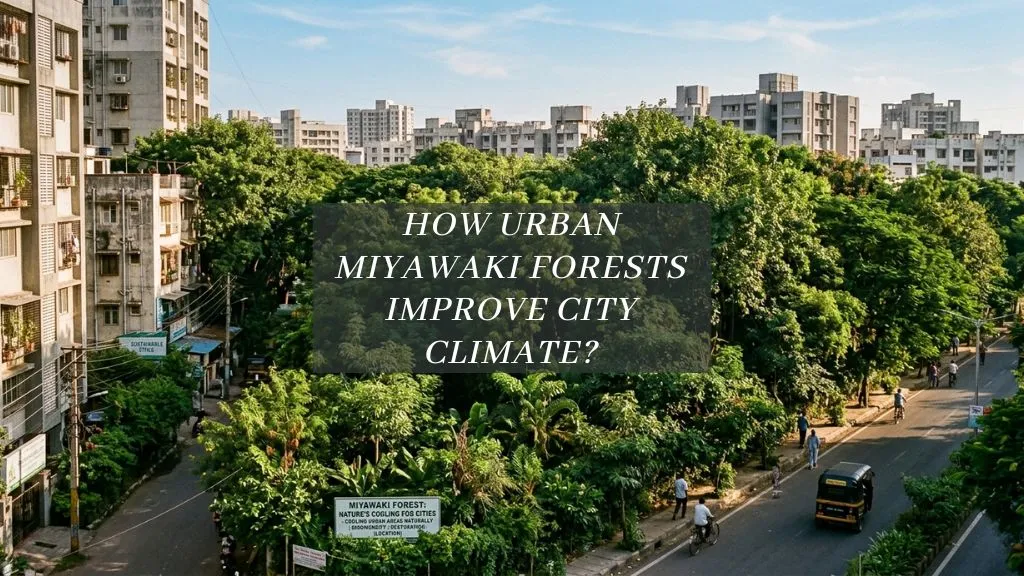
Walk outside in most Indian cities right now and the heat hits differently.
Not the normal “Indian summer” heat we grew up with. This feels harsher. Heavier. Even mornings don’t feel cool anymore.
Whether it’s in Bengaluru traffic, Delhi flyovers, Mumbai streets or Chennai roads, the problem feels the same. Too much concrete. Too little green cover.
And somewhere in between rapid urbanisation, wider roads, bigger buildings, glass towers, and endless construction… cities quietly lost trees. That’s exactly why the Miyawaki forest in India movement is suddenly getting attention.
People are no longer seeing trees as just “beautification.” They’re slowly understanding that dense green ecosystems can actually change how a place feels, breathes, and even cools down.
From schools and apartment communities to airports and corporate campuses, the Miyawaki technique is being used across India to create fast-growing mini forests in tiny urban spaces. And honestly? At a time when heatwaves are becoming part of daily life, the idea feels less like a trend and more like a necessity.
What Is the Miyawaki Method?
If you’ve searched “what is Miyawaki method” recently, you’re not alone.
The Japanese Miyawaki method was developed by Japanese botanist Akira Miyawaki in the 1970s. The idea was simple but powerful. Instead of planting decorative trees in rows, recreate dense native forests the way nature originally intended.
The Miyawaki technique focuses on:
Native tree species
Dense plantation
Multi-layered forests
Fast growth
Self-sustaining ecosystems
Unlike traditional plantations that can take decades to look like forests, the Miyawaki forest technique speeds up natural growth dramatically.
These forests are:
30 times denser
Grow nearly 10 times faster
Become self-sustaining in around 2–3 years
That’s why the Miyawaki forest in India concept has become so relevant for urban spaces where land is limited but environmental stress is increasing.
How the Miyawaki Forest Technique Works?
The Miyawaki forest technique may look simple from outside, but there’s actually a lot of ecological planning behind it.
1. Native Species Selection
The first step is choosing native Miyawaki plants that naturally belong to that region.
For example:
In Karnataka, species may include Honge, Neem, Peepal, Jamun, Arjuna, and Indian Cork Tree.
In coastal areas, species differ based on soil and rainfall.
Using native Miyawaki plants improves biodiversity, survival rate, and long-term ecological balance.
2. Dense Plantation
This is the biggest difference.
In the Miyawaki technique, around 3–5 saplings are planted per square meter. The close spacing creates natural competition for sunlight.
And surprisingly, that competition makes the forest grow faster.
3. Layered Forest Structure
A natural forest is never “one height.”
That’s why the Japanese Miyawaki method uses multiple layers:
Small trees
Medium canopy trees
Tall emergent trees
This layered system creates shade, moisture retention, and healthier soil conditions.
4. Soil Preparation
The soil is enriched using:
Organic compost
Cocopeat
Biomass
Rice husk
Water-retaining materials
Healthy soil is one of the biggest reasons why the Miyawaki forest technique works so quickly.
Why Indian Cities Need Miyawaki Forests Right Now
Indian cities are heating up faster than ever. And no, it’s not just because of climate change alone.
Urban heat islands are becoming a serious issue.
Concrete roads, glass buildings, parking lots, and lack of tree cover absorb and trap heat throughout the day. By evening, the heat still remains trapped in the environment.
That’s why many city areas feel several degrees hotter than nearby greener regions.
This is where the Miyawaki forest in India movement becomes important.
Dense forests naturally:
Reduce surrounding temperatures
Improve humidity balance
Create shade
Reduce dust and pollution
Improve groundwater absorption
Even small Miyawaki forests can help create cooler microclimates inside crowded urban areas.
And honestly, once you step inside a dense green patch after standing on a concrete road for 20 minutes, you physically feel the difference.
That cooling effect is exactly why urban planners, schools, airports, and residential communities are now exploring the Miyawaki technique.
What are the Real Benefits of Miyawaki Forests in India?
The benefits go far beyond “more greenery.”
Helps Reduce Heat
This is one of the biggest reasons behind the popularity of the Miyawaki forest in India.
Dense green cover blocks direct sunlight and lowers surrounding surface temperatures. During heatwaves, these forests act like natural cooling pockets.
Improves Air Quality
Miyawaki plants absorb dust particles, pollutants, and carbon dioxide. Cities struggling with poor AQI levels can genuinely benefit from dense urban forests.
Reduces Noise Pollution
Thick layers of vegetation naturally absorb sound. That’s why many Miyawaki forest technique projects are now being developed near roads and industrial belts.
Supports Biodiversity
Birds, butterflies, bees, and insects slowly return once native Miyawaki plants start growing.
In many Indian cities, biodiversity has reduced drastically. Mini forests help bring some of it back.
Improves Mental Wellbeing
This part people don’t talk about enough.
Green spaces genuinely affect mood. Even small forest patches reduce stress, mental fatigue, and the feeling of constant urban exhaustion.
Real-Life Miyawaki Forest India Examples
The Miyawaki forest in India movement is already spreading rapidly.
Chennai Airport
A Miyawaki forest was planted on airport land to reduce pollution and improve green cover.
Within a few years, thousands of saplings transformed the space dramatically.
Delhi Ridge Areas
Sections of Delhi have adopted the Miyawaki technique to restore degraded green areas and strengthen urban biodiversity.
Pune – Pashan Lake
Around Pashan Lake, Miyawaki forests helped improve ecological balance and green restoration.
Miyawaki Forest Bangalore Projects
The Miyawaki forest Bangalore trend is growing rapidly.
From apartment communities and schools to sustainability-driven projects, Bengaluru has become one of the leading cities experimenting with urban mini forests.
And honestly, Bengaluru residents probably understand this urgency the most. The city that was once famous for cool weather now experiences much hotter summers than before.
That shift itself says a lot.
What Are Miyawaki Plants?
A lot of people search for “Miyawaki plants” assuming they are special imported species.
But actually, Miyawaki plants are simply native plants selected carefully based on local ecology.
The goal is to recreate the original natural forest ecosystem of that area. Common Miyawaki plants in India may include:
Region | Common Native Miyawaki Plants |
Karnataka | Neem, Honge, Jamun, Peepal |
Maharashtra | Banyan, Arjun, Kadamba |
Tamil Nadu | Pongamia, Indian Elm |
Delhi NCR | Amaltas, Neem, Pilkhan |
The success of the Miyawaki forest technique depends heavily on choosing the right native species.
How to Create a Miyawaki Forest?
One reason the Japanese Miyawaki method is becoming popular is because it can work even in small urban plots.
Here’s a simplified process:
Step | What Happens |
1 | Identify available land |
2 | Test and prepare soil |
3 | Select native Miyawaki plants |
4 | Plant densely |
5 | Add mulch and irrigation |
6 | Maintain for 2–3 years |
7 | Allow the forest to self-sustain |
Even spaces as small as 100–200 square meters can become thriving urban forests.
The Future of Urban Living in India
The biggest reason the Miyawaki forest in India movement matters is this:
People are starting to rethink what “better living” actually means. For years, urban development focused only on infrastructure. Now the conversation is changing.
Questions people are asking today:
Will this place become hotter in the next 10 years?
Is there enough green cover nearby?
Can my children grow up around nature?
Will cities remain livable during extreme summers?
And honestly, these are important questions.
At Swasya Living, this shift towards greener, slower, and more ecosystem-conscious spaces feels deeply relevant.
At Swasya, we don’t just talk about sustainability; we live it. Within our managed farmlands, we’ve quietly integrated the Miyawaki philosophy to create dense, self-sustaining pockets of green that act as natural "cooling lungs" for our community. By choosing native species, the same ones that thrive in our forest-grown coffee estates, we ensure that every acre contributes to local biodiversity. It’s our way of bringing the quiet, cooling calm of a natural forest back into your life, ensuring your investment grows alongside a healthier, cooler planet.
Because sustainability is no longer just about aesthetics. It’s slowly becoming about comfort, health, and long-term quality of life.
The growing interest around the Miyawaki technique and Miyawaki forest Bangalore projects shows one thing clearly, people are no longer satisfied with just buildings.
They want breathable environments.
Final Thoughts
The Japanese Miyawaki method is not a magical overnight solution to climate change. But it is one of the most practical and scalable urban greening approaches available today.
The Miyawaki forest technique proves that even small land parcels can create meaningful environmental impact when planned thoughtfully.
As Indian cities continue to expand, the need for dense green ecosystems will only increase. And maybe that’s the real takeaway here.
The future of Indian cities may not depend only on smarter roads or taller buildings. It may depend on how successfully we bring nature back into everyday life. And in many ways, the rise of the Miyawaki forest in India movement feels like the beginning of that shift.
FAQs
1. What is the Miyawaki method?
The Miyawaki method is a dense plantation method, that is developed by Japanese botanist Akira Miyawaki. It mainly focuses on planting native species closely together to create fast-growing, self-sustaining forests.
2. How fast does a Miyawaki forest grow?
A Miyawaki forest grows nearly 10 times faster than traditional plantations. In most cases, visible dense growth can be seen within 2–3 years.
3. Does the Miyawaki technique really reduce temperature?
Yes. Dense green cover created through the Miyawaki technique helps reduce surrounding temperatures by creating shade, retaining moisture, and reducing heat absorption from concrete surfaces.
4. Which plants are used in Miyawaki forests?
Miyawaki plants are usually native species that naturally belong to that region. Common Indian species include Neem, Peepal, Jamun, Banyan, Honge, Kadamba, and Arjuna.
5. Can Miyawaki forests grow in small urban spaces?
Yes. One of the biggest advantages of the Miyawaki forest technique is that it works well even in compact urban spaces like school grounds, apartment communities, office campuses, and roadside patches.
6. Are there Miyawaki forest Bangalore projects?
Yes. Bengaluru has seen a growing number of Miyawaki forest Bangalore initiatives across residential communities, schools, eco-projects, and corporate campuses.
Walk outside in most Indian cities right now and the heat hits differently.
Not the normal “Indian summer” heat we grew up with. This feels harsher. Heavier. Even mornings don’t feel cool anymore.
Whether it’s in Bengaluru traffic, Delhi flyovers, Mumbai streets or Chennai roads, the problem feels the same. Too much concrete. Too little green cover.
And somewhere in between rapid urbanisation, wider roads, bigger buildings, glass towers, and endless construction… cities quietly lost trees. That’s exactly why the Miyawaki forest in India movement is suddenly getting attention.
People are no longer seeing trees as just “beautification.” They’re slowly understanding that dense green ecosystems can actually change how a place feels, breathes, and even cools down.
From schools and apartment communities to airports and corporate campuses, the Miyawaki technique is being used across India to create fast-growing mini forests in tiny urban spaces. And honestly? At a time when heatwaves are becoming part of daily life, the idea feels less like a trend and more like a necessity.
What Is the Miyawaki Method?
If you’ve searched “what is Miyawaki method” recently, you’re not alone.
The Japanese Miyawaki method was developed by Japanese botanist Akira Miyawaki in the 1970s. The idea was simple but powerful. Instead of planting decorative trees in rows, recreate dense native forests the way nature originally intended.
The Miyawaki technique focuses on:
Native tree species
Dense plantation
Multi-layered forests
Fast growth
Self-sustaining ecosystems
Unlike traditional plantations that can take decades to look like forests, the Miyawaki forest technique speeds up natural growth dramatically.
These forests are:
30 times denser
Grow nearly 10 times faster
Become self-sustaining in around 2–3 years
That’s why the Miyawaki forest in India concept has become so relevant for urban spaces where land is limited but environmental stress is increasing.
How the Miyawaki Forest Technique Works?
The Miyawaki forest technique may look simple from outside, but there’s actually a lot of ecological planning behind it.
1. Native Species Selection
The first step is choosing native Miyawaki plants that naturally belong to that region.
For example:
In Karnataka, species may include Honge, Neem, Peepal, Jamun, Arjuna, and Indian Cork Tree.
In coastal areas, species differ based on soil and rainfall.
Using native Miyawaki plants improves biodiversity, survival rate, and long-term ecological balance.
2. Dense Plantation
This is the biggest difference.
In the Miyawaki technique, around 3–5 saplings are planted per square meter. The close spacing creates natural competition for sunlight.
And surprisingly, that competition makes the forest grow faster.
3. Layered Forest Structure
A natural forest is never “one height.”
That’s why the Japanese Miyawaki method uses multiple layers:
Small trees
Medium canopy trees
Tall emergent trees
This layered system creates shade, moisture retention, and healthier soil conditions.
4. Soil Preparation
The soil is enriched using:
Organic compost
Cocopeat
Biomass
Rice husk
Water-retaining materials
Healthy soil is one of the biggest reasons why the Miyawaki forest technique works so quickly.
Why Indian Cities Need Miyawaki Forests Right Now
Indian cities are heating up faster than ever. And no, it’s not just because of climate change alone.
Urban heat islands are becoming a serious issue.
Concrete roads, glass buildings, parking lots, and lack of tree cover absorb and trap heat throughout the day. By evening, the heat still remains trapped in the environment.
That’s why many city areas feel several degrees hotter than nearby greener regions.
This is where the Miyawaki forest in India movement becomes important.
Dense forests naturally:
Reduce surrounding temperatures
Improve humidity balance
Create shade
Reduce dust and pollution
Improve groundwater absorption
Even small Miyawaki forests can help create cooler microclimates inside crowded urban areas.
And honestly, once you step inside a dense green patch after standing on a concrete road for 20 minutes, you physically feel the difference.
That cooling effect is exactly why urban planners, schools, airports, and residential communities are now exploring the Miyawaki technique.
What are the Real Benefits of Miyawaki Forests in India?
The benefits go far beyond “more greenery.”
Helps Reduce Heat
This is one of the biggest reasons behind the popularity of the Miyawaki forest in India.
Dense green cover blocks direct sunlight and lowers surrounding surface temperatures. During heatwaves, these forests act like natural cooling pockets.
Improves Air Quality
Miyawaki plants absorb dust particles, pollutants, and carbon dioxide. Cities struggling with poor AQI levels can genuinely benefit from dense urban forests.
Reduces Noise Pollution
Thick layers of vegetation naturally absorb sound. That’s why many Miyawaki forest technique projects are now being developed near roads and industrial belts.
Supports Biodiversity
Birds, butterflies, bees, and insects slowly return once native Miyawaki plants start growing.
In many Indian cities, biodiversity has reduced drastically. Mini forests help bring some of it back.
Improves Mental Wellbeing
This part people don’t talk about enough.
Green spaces genuinely affect mood. Even small forest patches reduce stress, mental fatigue, and the feeling of constant urban exhaustion.
Real-Life Miyawaki Forest India Examples
The Miyawaki forest in India movement is already spreading rapidly.
Chennai Airport
A Miyawaki forest was planted on airport land to reduce pollution and improve green cover.
Within a few years, thousands of saplings transformed the space dramatically.
Delhi Ridge Areas
Sections of Delhi have adopted the Miyawaki technique to restore degraded green areas and strengthen urban biodiversity.
Pune – Pashan Lake
Around Pashan Lake, Miyawaki forests helped improve ecological balance and green restoration.
Miyawaki Forest Bangalore Projects
The Miyawaki forest Bangalore trend is growing rapidly.
From apartment communities and schools to sustainability-driven projects, Bengaluru has become one of the leading cities experimenting with urban mini forests.
And honestly, Bengaluru residents probably understand this urgency the most. The city that was once famous for cool weather now experiences much hotter summers than before.
That shift itself says a lot.
What Are Miyawaki Plants?
A lot of people search for “Miyawaki plants” assuming they are special imported species.
But actually, Miyawaki plants are simply native plants selected carefully based on local ecology.
The goal is to recreate the original natural forest ecosystem of that area. Common Miyawaki plants in India may include:
Region | Common Native Miyawaki Plants |
Karnataka | Neem, Honge, Jamun, Peepal |
Maharashtra | Banyan, Arjun, Kadamba |
Tamil Nadu | Pongamia, Indian Elm |
Delhi NCR | Amaltas, Neem, Pilkhan |
The success of the Miyawaki forest technique depends heavily on choosing the right native species.
How to Create a Miyawaki Forest?
One reason the Japanese Miyawaki method is becoming popular is because it can work even in small urban plots.
Here’s a simplified process:
Step | What Happens |
1 | Identify available land |
2 | Test and prepare soil |
3 | Select native Miyawaki plants |
4 | Plant densely |
5 | Add mulch and irrigation |
6 | Maintain for 2–3 years |
7 | Allow the forest to self-sustain |
Even spaces as small as 100–200 square meters can become thriving urban forests.
The Future of Urban Living in India
The biggest reason the Miyawaki forest in India movement matters is this:
People are starting to rethink what “better living” actually means. For years, urban development focused only on infrastructure. Now the conversation is changing.
Questions people are asking today:
Will this place become hotter in the next 10 years?
Is there enough green cover nearby?
Can my children grow up around nature?
Will cities remain livable during extreme summers?
And honestly, these are important questions.
At Swasya Living, this shift towards greener, slower, and more ecosystem-conscious spaces feels deeply relevant.
At Swasya, we don’t just talk about sustainability; we live it. Within our managed farmlands, we’ve quietly integrated the Miyawaki philosophy to create dense, self-sustaining pockets of green that act as natural "cooling lungs" for our community. By choosing native species, the same ones that thrive in our forest-grown coffee estates, we ensure that every acre contributes to local biodiversity. It’s our way of bringing the quiet, cooling calm of a natural forest back into your life, ensuring your investment grows alongside a healthier, cooler planet.
Because sustainability is no longer just about aesthetics. It’s slowly becoming about comfort, health, and long-term quality of life.
The growing interest around the Miyawaki technique and Miyawaki forest Bangalore projects shows one thing clearly, people are no longer satisfied with just buildings.
They want breathable environments.
Final Thoughts
The Japanese Miyawaki method is not a magical overnight solution to climate change. But it is one of the most practical and scalable urban greening approaches available today.
The Miyawaki forest technique proves that even small land parcels can create meaningful environmental impact when planned thoughtfully.
As Indian cities continue to expand, the need for dense green ecosystems will only increase. And maybe that’s the real takeaway here.
The future of Indian cities may not depend only on smarter roads or taller buildings. It may depend on how successfully we bring nature back into everyday life. And in many ways, the rise of the Miyawaki forest in India movement feels like the beginning of that shift.
FAQs
1. What is the Miyawaki method?
The Miyawaki method is a dense plantation method, that is developed by Japanese botanist Akira Miyawaki. It mainly focuses on planting native species closely together to create fast-growing, self-sustaining forests.
2. How fast does a Miyawaki forest grow?
A Miyawaki forest grows nearly 10 times faster than traditional plantations. In most cases, visible dense growth can be seen within 2–3 years.
3. Does the Miyawaki technique really reduce temperature?
Yes. Dense green cover created through the Miyawaki technique helps reduce surrounding temperatures by creating shade, retaining moisture, and reducing heat absorption from concrete surfaces.
4. Which plants are used in Miyawaki forests?
Miyawaki plants are usually native species that naturally belong to that region. Common Indian species include Neem, Peepal, Jamun, Banyan, Honge, Kadamba, and Arjuna.
5. Can Miyawaki forests grow in small urban spaces?
Yes. One of the biggest advantages of the Miyawaki forest technique is that it works well even in compact urban spaces like school grounds, apartment communities, office campuses, and roadside patches.
6. Are there Miyawaki forest Bangalore projects?
Yes. Bengaluru has seen a growing number of Miyawaki forest Bangalore initiatives across residential communities, schools, eco-projects, and corporate campuses.
Akshata
You Might Also Like




Subscribe to the Swasya
newsletter
Discover insights about sustainable farming, investment opportunities, and the future of agriculture.
By subscribing, you agree to the Privacy Policy
Subscribe to the Swasya
newsletter
Discover insights about sustainable farming, investment opportunities, and the future of agriculture.
By subscribing, you agree to the Privacy Policy