Investment
Buying Managed Farmland vs Standalone Farms: Which Is Better for IT Professionals?
If you are an IT professional thinking about buying farmland, you already know what you are really searching for.
You want space. Quiet. Nature. A real asset that grows with time.
But you don’t want to become a part-time farmer or land manager on weekends.
That is why the question today is not “Should I buy farmland?” It is “What kind of farmland ownership can I actually sustain?”
In India, most professionals end up choosing between two models:
Standalone farmland (you manage everything)
Managed farmland (a structured system handles operations)
Both are forms of farm investment. Both can work. But the experience is completely different.
This guide breaks down managed farmland vs standalone farms, so you can decide what fits your lifestyle, risk tolerance, and long-term goals (especially if you’re buying farmland as an investment).
Before you think about ROI, lifestyle, or Instagram-worthy farm pics, you need to understand how ownership actually works.
In the Bangalore region (especially around Sakleshpur, Chikkamagaluru, Coorg belt), buyers usually choose between two models: Standalone farms and Managed farmlands.
What is a Standalone Farm?
A standalone farm means you directly buy a piece of agricultural land and manage everything yourself.
You are responsible for:
Selecting crops or plantations
Borewell, water storage, irrigation planning
Hiring and managing farm labor
Fencing, boundaries, security
Soil health, pruning, pest control
Local coordination (neighbors, vendors, caretakers)
Visiting regularly to ensure things are actually done
In simple words, standalone farms are like self-hosted servers. You get full control. But you also manage everything. Time, people, mistakes, and stress.
For some people, this is the dream. For busy IT professionals, this can quietly become a second job.
What is Managed Farmland?

Managed farmland is a structured ownership model designed for people who want land but not daily operations.
In managed farms (like Sakleshpur managed farmlands), you typically:
Own a legally defined plot inside a planned farmland community
Get plantation and basic maintenance handled by the operator
Share infrastructure like internal roads, fencing, and community zones
Receive periodic updates without visiting every week
Think of managed farmland like cloud-managed hosting. You still own the asset. But you are not running every operational layer.
This is why managed farmland is growing fast among Bangalore IT professionals looking for farm investment without lifestyle disruption.
Standalone Farm vs Managed Farm
Standalone farms = maximum control, maximum responsibility
Managed farms = structured ownership, lower operational burden
Both are forms of buying farmland as an investment, but the experience is very different.
One requires hands-on involvement. The other is designed for hands-off owners who value time, predictability, and family-friendly visits.
Why Standalone Farms Don't Work for Busy Professionals
Most IT professionals buy farmland for peace, nature, and long-term farm investment. But many standalone farms quietly fail, not financially, but emotionally and operationally.
Here are the real reasons.
Anxiety about security and boundaries
Even if nothing goes wrong, fear of something going wrong is real. Unclear boundaries, weak fencing, or infrequent visits create mental stress.
Many owners stop enjoying their land because they feel they must constantly “monitor” it.
Working Full-Time on Water Planning
Water is more than a simple "yes/no" answer.
It is:
Storage tanks
Irrigation design
Summer drought strategy
Long-term groundwater sustainability
Without structured planning, standalone farms often become reactive and expensive.
Local Dependency and Labour
Hiring reliable farm labor is not a one-time task. People change, expectations change, seasons change.
If you cannot visit frequently, standalone farms become vulnerable to:
Delayed pruning
Poor irrigation schedules
Miscommunication about tasks
Plantation losses that you find out too late
This is the hidden risk of buying farmland as an investment without an operational system.
Weekend Worktrap
Most people imagine this: Coffee in hand, walking through your land, birds chirping, zero stress.
Reality for standalone farms:
Supervising labor
Fixing fencing
Calling the borewell guy
Checking plantation survival
Negotiating with caretakers
Your weekend turns into a project management sprint. After a few months, visits reduce. Then neglect starts.
IT Professionals’ Growing Interest in Managed Farmland
This is where managed farmland changes the game. Not because it guarantees profits, but because it fits modern lifestyles.
1) Structured Buying & Ownership Experience
First-time buyers often feel lost. Managed farmland projects usually have:
Clear project explanation
Plantation roadmap
Maintenance scope
Regular updates
This reduces anxiety for people new to farm investment.
2) Usability improves with shared infrastructure
Standalone farms require you to build everything from scratch. Managed farms often provide:
Internal roads
Common areas
Boundary planning
Community spaces
This makes land usable, not just ownable. Families actually visit more often.
3) Matches the “Time is Money” Mindset
For most IT professionals, time is the real asset. Managed farmland is a trade-off:
Pay for structured management
Gain peace, predictability, and time
That’s why managed farms are booming near Bangalore and Sakleshpur. They align with modern lifestyles.
4) You visit for fun, not supervision
The biggest benefit of managed farmland is psychological. You arrive to relax, walk, and spend time with family, not to check task lists.
That’s why many IT buyers prefer managed farms for weekend retreats and Holiday Homes.
5) Lower Neglect Risk (Huge Advantage)
Most professionals cannot visit weekly. Managed farms keep:
Plantation schedules consistent
Basic upkeep ongoing
Community standards maintained
So your land doesn’t turn into a jungle when you are busy with deadlines.
Managed Farmland vs Standalone Farms: Quick Comparison Table
Factor | Standalone Farms | Managed Farmland |
Ownership Type | Direct land ownership with full personal responsibility | Ownership within a structured managed farm community |
Maintenance Responsibility | 100% handled by the owner (labor, irrigation, security, pruning) | Handled by the operator as per management scope |
Time Commitment | High – requires frequent visits and coordination | Low to medium. Suitable for busy IT professionals |
Weekend Experience | Can feel like work (supervision, fixing issues) | Designed for relaxation and lifestyle use |
Water, Irrigation Planning | Owner must plan, invest, and monitor | Typically planned and executed centrally |
Security, Boundaries | Owner must manage fencing and security | Community-level standards and systems |
Infrastructure | Built individually (roads, utilities, access) | Shared infrastructure (roads, common areas, planning) |
Control Level | Full control over crops, design, and operations | Limited control but structured predictability |
Neglect Risk | High if owner cannot visit regularly | Zero. Due to ongoing management |
Initial Cost | Usually lower land cost but high setup effort | Slightly higher cost due to management and amenities |
Lifestyle Value | Great for hands-on farming enthusiasts | Ideal for Holiday Homes and nature-centric retreats |
Resale Narrative | Depends on individual plot condition | Can benefit from branded community and maintained standards |
An Explicit Framework for IT Professionals to Make Decisions
Before deciding between a standalone farm and managed farmland, use this brief framework. To yourself, be completely transparent.
Lifestyle vs Investment Priority
Pure lifestyle, Holiday Homes, weekend retreats- Managed farms win.
Experimental farming, learning agriculture deeply -Standalone farms make sense.
Buying farmland as an investment with minimal stress - Managed farmland.
Time Value Mindset (Big One for IT Pros)
If time > money -Managed farms.
If control > convenience - Standalone farms.
Family Usage Reality Check
Family loves nature trips, kids will visit often - Either model works.
Only you are interested - Managed farmland is safer (less burnout).
What’s Your Risk Tolerance?
Comfortable handling water issues, labor gaps, security? - Standalone farm.
Prefer predictable systems and shared responsibility? - Managed farmland.
Do You Enjoy Managing People & Tasks?
Love coordinating labor, vendors, irrigation? -Standalone farm.
Hate follow-ups and chaos? - Managed farmland.
And one is very important. How Often Will You Actually Visit?
Monthly or quarterly visits - Managed farmland fits better.
Every weekend, hands-on mode - Standalone farm can work.
Once or twice a year - Managed farmland is almost mandatory.
If you are buying farmland as an investment but don’t want a second job, managed farmland is usually the smarter choice.
Things to Check Before Selecting a Stand-Alone Farm
1) Water Security
Borewell depth, groundwater history, storage options.
Worst-case summer scenario—not monsoon optimism.
2) Access & Boundaries
Clear road access.
Survey boundaries, fencing, and encroachment risk.
3) Caretaker & Labor Plan
Who will manage when you are not there?
Backup plan if caretaker leaves?
4) Soil & Crop Suitability
Soil type, past crops, long-term plantation potential.
Don’t assume everything grows everywhere.
5) Security & Local Ecosystem
Nearby activity, theft risk, local support system.
Relationship with neighbors matters more than you think.
6) Your Time Commitment
Are you ready for calls, visits, vendors, irrigation checks?
If weekends become work, you’ll stop going—be honest.
Things to Check Before Selecting Managed Farmland
1) Management Scope (In Writing)
What exactly is maintained. Plants, fencing, irrigation, roads?
What is not included (hidden costs)?
2) Plantation & Farming Plan
What crops or trees will be planted?
Timeline for growth, harvest, and upkeep?
3) Update & Reporting System
How often will you get updates? Monthly? Quarterly?
Photos, dashboards, WhatsApp groups. What’s the system?
4) Community Rules & Governance
How are boundaries, common areas, and standards enforced?
What happens if an owner violates rules?
5) Exit & Resale Clarity
Can you resell freely? Any transfer fees or restrictions?
Is there assistance for resale or buyers?
6) Legal Due Diligence
Title clarity, conversion status, access road rights.
Always verify with an independent property lawyer (non-negotiable).
Managed farmland reduces operational stress, while standalone farmland offers full control. But demands time, planning, and hands-on involvement of yours.
Why Busy IT Professionals Prefer Low-Maintenance Managed Farmland Ownership
Most IT professionals don’t buy farmland to manage workers, fix fencing, or argue about water schedules. They buy it for peace, nature, and long-term farm investment value.
But psychology plays a huge role here. After long weekdays full of meetings, deadlines, and screens, nobody wants another “project” on weekends. Standalone farms often turn into another responsibility. Managed farmland feels like an asset that runs in the background.
1) Time Is the New Currency
For tech professionals, time is more valuable than money. A managed farmland model reduces the mental load of coordinating labor, irrigation, and maintenance. Ownership feels passive, not exhausting.
2) Predictability Reduces Anxiety
Uncertainty kills enjoyment. When land is managed through a structured system, owners feel more confident that their farm investment is taken care of, even when they are stuck in Bangalore traffic or working late nights.
3) Lifestyle Over Land Management
Most buyers imagine weekend walks, coffee under trees, and kids playing in open space. Managed farms make that lifestyle realistic. Standalone farms often turn weekends into supervision duty.
4) Social & Community Comfort
Managed farms usually come with a community vibe. Neighbors, shared spaces, planned infrastructure. Psychologically, this reduces the “lonely landowner” feeling and makes visits more frequent and enjoyable.
5) Reduced Guilt of Neglect
Many standalone farm buyers feel guilty when they can’t visit often. With managed farms, even if you skip months, the land stays alive and maintained. That emotional relief is huge.
Why Managed Farmland Aligns Better With Bangalore & Sakleshpur Buyers
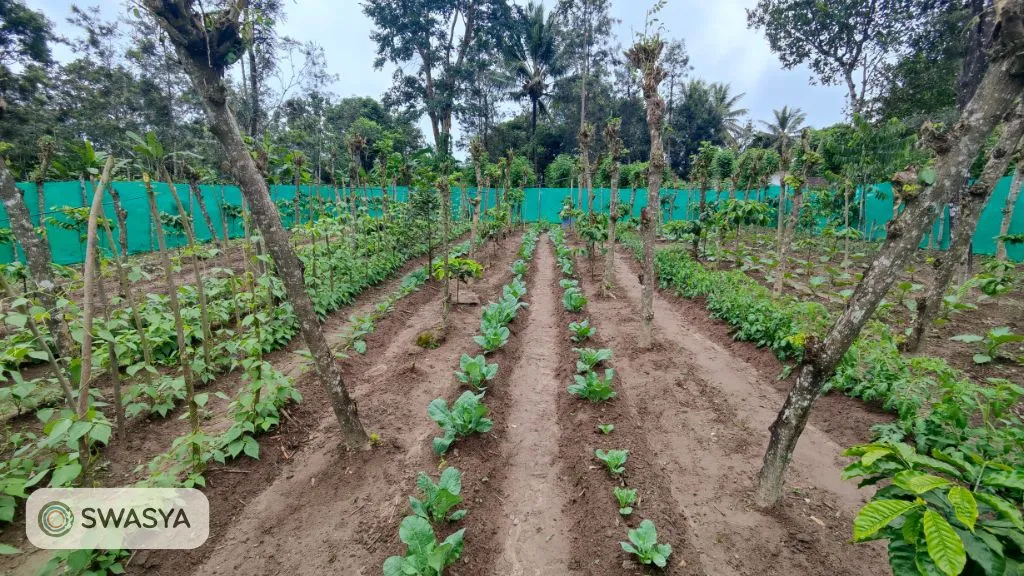
Bangalore buyers live fast. Workweeks are long. Traffic is madness. Weekends are precious. That’s why managed farmland fits this crowd better than standalone farms.
For most people buying land in Sakleshpur, it’s not a daily farm job. It’s a weekend escape, a future retirement plan, or a smart farm investment. Managed farmland keeps the land productive even when owners can’t visit often.
Sakleshpur also has heavy rainfall, dense plantations, and seasonal maintenance needs. Without a local system, standalone farms can quickly get overgrown or neglected. Managed farms handle this reality on the ground, so Bangalore buyers can enjoy the nature without micromanaging it.
In short, Bangalore professionals want nature without complexity. Sakleshpur managed farms offer exactly that: structured ownership with a lifestyle angle.
Common Myths IT Professionals Have About Managed Farmland
“I don’t really own the land.” You do own your plot legally, management is just an operational layer.
“It’s only for rich people or NRIs.” Many mid-income IT buyers are entering managed farms for long-term farm investment.
“I’ll never need to visit.” You can skip visits, but real joy comes when you actually use the land and experience nature.
“Standalone farms are always cheaper.” Sometimes yes, but hidden costs (labor, fencing, water, security) add up fast.
Choose the Farm Model That Matches Your Life
Buying farmland is never just a financial move. It’s a life move. It changes how your weekends feel, how your family spends time together, and how connected you feel to nature.
Standalone farms can be deeply rewarding if you enjoy managing everything yourself. From water planning to labor and crop cycles. But for many IT professionals around Bangalore and Sakleshpur, managed farmland makes ownership realistic, sustainable, and stress-free. It allows you to enjoy the land, not constantly worry about it.
At Swasya, we’ve seen how thoughtfully planned managed farms help people actually use their land instead of just owning it on paper. When systems, community, and nature come together, farmland stops being a burden and starts becoming a lifestyle asset or holiday homes.
In the end, the best farm investment is not the one with the highest projections, it’s the one that fits into your real life and stays meaningful for years to come.
FAQs
1. Is managed farmland a good farm investment for IT professionals?
Yes, managed farmland can be a smart farm investment for IT professionals because it reduces operational stress while still offering land ownership and long-term appreciation.
2. What are the benefits of traditional farming compared to managed farms?
The benefits of traditional farming include full control, flexibility in crop choices, and potentially lower upfront costs, but it requires active involvement and time.
3. Is buying farmland as an investment better than buying apartments in Bangalore?
Buying farmland as an investment can offer long-term capital appreciation and lifestyle value, but it is less liquid and requires careful legal and location checks.
4. Are managed farms safer than standalone farms?
Managed farms reduce maintenance and neglect risks, but safety depends on the developer’s credibility, legal clarity, and ongoing management quality.
5. Can IT professionals manage standalone farmland without a caretaker?
It’s possible, but most IT professionals struggle with time, water management, labor coordination, and security without a local caretaker or system.
6. Which is better for Bangalore buyers—managed farmland or traditional farming land?
For most Bangalore buyers, managed farmland aligns better with lifestyle constraints, while traditional farming suits hands-on owners who enjoy active farm management.
If you are an IT professional thinking about buying farmland, you already know what you are really searching for.
You want space. Quiet. Nature. A real asset that grows with time.
But you don’t want to become a part-time farmer or land manager on weekends.
That is why the question today is not “Should I buy farmland?” It is “What kind of farmland ownership can I actually sustain?”
In India, most professionals end up choosing between two models:
Standalone farmland (you manage everything)
Managed farmland (a structured system handles operations)
Both are forms of farm investment. Both can work. But the experience is completely different.
This guide breaks down managed farmland vs standalone farms, so you can decide what fits your lifestyle, risk tolerance, and long-term goals (especially if you’re buying farmland as an investment).
Before you think about ROI, lifestyle, or Instagram-worthy farm pics, you need to understand how ownership actually works.
In the Bangalore region (especially around Sakleshpur, Chikkamagaluru, Coorg belt), buyers usually choose between two models: Standalone farms and Managed farmlands.
What is a Standalone Farm?
A standalone farm means you directly buy a piece of agricultural land and manage everything yourself.
You are responsible for:
Selecting crops or plantations
Borewell, water storage, irrigation planning
Hiring and managing farm labor
Fencing, boundaries, security
Soil health, pruning, pest control
Local coordination (neighbors, vendors, caretakers)
Visiting regularly to ensure things are actually done
In simple words, standalone farms are like self-hosted servers. You get full control. But you also manage everything. Time, people, mistakes, and stress.
For some people, this is the dream. For busy IT professionals, this can quietly become a second job.
What is Managed Farmland?
Managed farmland is a structured ownership model designed for people who want land but not daily operations.
In managed farms (like Sakleshpur managed farmlands), you typically:
Own a legally defined plot inside a planned farmland community
Get plantation and basic maintenance handled by the operator
Share infrastructure like internal roads, fencing, and community zones
Receive periodic updates without visiting every week
Think of managed farmland like cloud-managed hosting. You still own the asset. But you are not running every operational layer.
This is why managed farmland is growing fast among Bangalore IT professionals looking for farm investment without lifestyle disruption.
Standalone Farm vs Managed Farm
Standalone farms = maximum control, maximum responsibility
Managed farms = structured ownership, lower operational burden
Both are forms of buying farmland as an investment, but the experience is very different.
One requires hands-on involvement. The other is designed for hands-off owners who value time, predictability, and family-friendly visits.
Why Standalone Farms Don't Work for Busy Professionals
Most IT professionals buy farmland for peace, nature, and long-term farm investment. But many standalone farms quietly fail, not financially, but emotionally and operationally.
Here are the real reasons.
Anxiety about security and boundaries
Even if nothing goes wrong, fear of something going wrong is real. Unclear boundaries, weak fencing, or infrequent visits create mental stress.
Many owners stop enjoying their land because they feel they must constantly “monitor” it.
Working Full-Time on Water Planning
Water is more than a simple "yes/no" answer.
It is:
Storage tanks
Irrigation design
Summer drought strategy
Long-term groundwater sustainability
Without structured planning, standalone farms often become reactive and expensive.
Local Dependency and Labour
Hiring reliable farm labor is not a one-time task. People change, expectations change, seasons change.
If you cannot visit frequently, standalone farms become vulnerable to:
Delayed pruning
Poor irrigation schedules
Miscommunication about tasks
Plantation losses that you find out too late
This is the hidden risk of buying farmland as an investment without an operational system.
Weekend Worktrap
Most people imagine this: Coffee in hand, walking through your land, birds chirping, zero stress.
Reality for standalone farms:
Supervising labor
Fixing fencing
Calling the borewell guy
Checking plantation survival
Negotiating with caretakers
Your weekend turns into a project management sprint. After a few months, visits reduce. Then neglect starts.
IT Professionals’ Growing Interest in Managed Farmland
This is where managed farmland changes the game. Not because it guarantees profits, but because it fits modern lifestyles.
1) Structured Buying & Ownership Experience
First-time buyers often feel lost. Managed farmland projects usually have:
Clear project explanation
Plantation roadmap
Maintenance scope
Regular updates
This reduces anxiety for people new to farm investment.
2) Usability improves with shared infrastructure
Standalone farms require you to build everything from scratch. Managed farms often provide:
Internal roads
Common areas
Boundary planning
Community spaces
This makes land usable, not just ownable. Families actually visit more often.
3) Matches the “Time is Money” Mindset
For most IT professionals, time is the real asset. Managed farmland is a trade-off:
Pay for structured management
Gain peace, predictability, and time
That’s why managed farms are booming near Bangalore and Sakleshpur. They align with modern lifestyles.
4) You visit for fun, not supervision
The biggest benefit of managed farmland is psychological. You arrive to relax, walk, and spend time with family, not to check task lists.
That’s why many IT buyers prefer managed farms for weekend retreats and Holiday Homes.
5) Lower Neglect Risk (Huge Advantage)
Most professionals cannot visit weekly. Managed farms keep:
Plantation schedules consistent
Basic upkeep ongoing
Community standards maintained
So your land doesn’t turn into a jungle when you are busy with deadlines.
Managed Farmland vs Standalone Farms: Quick Comparison Table
Factor | Standalone Farms | Managed Farmland |
Ownership Type | Direct land ownership with full personal responsibility | Ownership within a structured managed farm community |
Maintenance Responsibility | 100% handled by the owner (labor, irrigation, security, pruning) | Handled by the operator as per management scope |
Time Commitment | High – requires frequent visits and coordination | Low to medium. Suitable for busy IT professionals |
Weekend Experience | Can feel like work (supervision, fixing issues) | Designed for relaxation and lifestyle use |
Water, Irrigation Planning | Owner must plan, invest, and monitor | Typically planned and executed centrally |
Security, Boundaries | Owner must manage fencing and security | Community-level standards and systems |
Infrastructure | Built individually (roads, utilities, access) | Shared infrastructure (roads, common areas, planning) |
Control Level | Full control over crops, design, and operations | Limited control but structured predictability |
Neglect Risk | High if owner cannot visit regularly | Zero. Due to ongoing management |
Initial Cost | Usually lower land cost but high setup effort | Slightly higher cost due to management and amenities |
Lifestyle Value | Great for hands-on farming enthusiasts | Ideal for Holiday Homes and nature-centric retreats |
Resale Narrative | Depends on individual plot condition | Can benefit from branded community and maintained standards |
An Explicit Framework for IT Professionals to Make Decisions
Before deciding between a standalone farm and managed farmland, use this brief framework. To yourself, be completely transparent.
Lifestyle vs Investment Priority
Pure lifestyle, Holiday Homes, weekend retreats- Managed farms win.
Experimental farming, learning agriculture deeply -Standalone farms make sense.
Buying farmland as an investment with minimal stress - Managed farmland.
Time Value Mindset (Big One for IT Pros)
If time > money -Managed farms.
If control > convenience - Standalone farms.
Family Usage Reality Check
Family loves nature trips, kids will visit often - Either model works.
Only you are interested - Managed farmland is safer (less burnout).
What’s Your Risk Tolerance?
Comfortable handling water issues, labor gaps, security? - Standalone farm.
Prefer predictable systems and shared responsibility? - Managed farmland.
Do You Enjoy Managing People & Tasks?
Love coordinating labor, vendors, irrigation? -Standalone farm.
Hate follow-ups and chaos? - Managed farmland.
And one is very important. How Often Will You Actually Visit?
Monthly or quarterly visits - Managed farmland fits better.
Every weekend, hands-on mode - Standalone farm can work.
Once or twice a year - Managed farmland is almost mandatory.
If you are buying farmland as an investment but don’t want a second job, managed farmland is usually the smarter choice.
Things to Check Before Selecting a Stand-Alone Farm
1) Water Security
Borewell depth, groundwater history, storage options.
Worst-case summer scenario—not monsoon optimism.
2) Access & Boundaries
Clear road access.
Survey boundaries, fencing, and encroachment risk.
3) Caretaker & Labor Plan
Who will manage when you are not there?
Backup plan if caretaker leaves?
4) Soil & Crop Suitability
Soil type, past crops, long-term plantation potential.
Don’t assume everything grows everywhere.
5) Security & Local Ecosystem
Nearby activity, theft risk, local support system.
Relationship with neighbors matters more than you think.
6) Your Time Commitment
Are you ready for calls, visits, vendors, irrigation checks?
If weekends become work, you’ll stop going—be honest.
Things to Check Before Selecting Managed Farmland
1) Management Scope (In Writing)
What exactly is maintained. Plants, fencing, irrigation, roads?
What is not included (hidden costs)?
2) Plantation & Farming Plan
What crops or trees will be planted?
Timeline for growth, harvest, and upkeep?
3) Update & Reporting System
How often will you get updates? Monthly? Quarterly?
Photos, dashboards, WhatsApp groups. What’s the system?
4) Community Rules & Governance
How are boundaries, common areas, and standards enforced?
What happens if an owner violates rules?
5) Exit & Resale Clarity
Can you resell freely? Any transfer fees or restrictions?
Is there assistance for resale or buyers?
6) Legal Due Diligence
Title clarity, conversion status, access road rights.
Always verify with an independent property lawyer (non-negotiable).
Managed farmland reduces operational stress, while standalone farmland offers full control. But demands time, planning, and hands-on involvement of yours.
Why Busy IT Professionals Prefer Low-Maintenance Managed Farmland Ownership
Most IT professionals don’t buy farmland to manage workers, fix fencing, or argue about water schedules. They buy it for peace, nature, and long-term farm investment value.
But psychology plays a huge role here. After long weekdays full of meetings, deadlines, and screens, nobody wants another “project” on weekends. Standalone farms often turn into another responsibility. Managed farmland feels like an asset that runs in the background.
1) Time Is the New Currency
For tech professionals, time is more valuable than money. A managed farmland model reduces the mental load of coordinating labor, irrigation, and maintenance. Ownership feels passive, not exhausting.
2) Predictability Reduces Anxiety
Uncertainty kills enjoyment. When land is managed through a structured system, owners feel more confident that their farm investment is taken care of, even when they are stuck in Bangalore traffic or working late nights.
3) Lifestyle Over Land Management
Most buyers imagine weekend walks, coffee under trees, and kids playing in open space. Managed farms make that lifestyle realistic. Standalone farms often turn weekends into supervision duty.
4) Social & Community Comfort
Managed farms usually come with a community vibe. Neighbors, shared spaces, planned infrastructure. Psychologically, this reduces the “lonely landowner” feeling and makes visits more frequent and enjoyable.
5) Reduced Guilt of Neglect
Many standalone farm buyers feel guilty when they can’t visit often. With managed farms, even if you skip months, the land stays alive and maintained. That emotional relief is huge.
Why Managed Farmland Aligns Better With Bangalore & Sakleshpur Buyers
Bangalore buyers live fast. Workweeks are long. Traffic is madness. Weekends are precious. That’s why managed farmland fits this crowd better than standalone farms.
For most people buying land in Sakleshpur, it’s not a daily farm job. It’s a weekend escape, a future retirement plan, or a smart farm investment. Managed farmland keeps the land productive even when owners can’t visit often.
Sakleshpur also has heavy rainfall, dense plantations, and seasonal maintenance needs. Without a local system, standalone farms can quickly get overgrown or neglected. Managed farms handle this reality on the ground, so Bangalore buyers can enjoy the nature without micromanaging it.
In short, Bangalore professionals want nature without complexity. Sakleshpur managed farms offer exactly that: structured ownership with a lifestyle angle.
Common Myths IT Professionals Have About Managed Farmland
“I don’t really own the land.” You do own your plot legally, management is just an operational layer.
“It’s only for rich people or NRIs.” Many mid-income IT buyers are entering managed farms for long-term farm investment.
“I’ll never need to visit.” You can skip visits, but real joy comes when you actually use the land and experience nature.
“Standalone farms are always cheaper.” Sometimes yes, but hidden costs (labor, fencing, water, security) add up fast.
Choose the Farm Model That Matches Your Life
Buying farmland is never just a financial move. It’s a life move. It changes how your weekends feel, how your family spends time together, and how connected you feel to nature.
Standalone farms can be deeply rewarding if you enjoy managing everything yourself. From water planning to labor and crop cycles. But for many IT professionals around Bangalore and Sakleshpur, managed farmland makes ownership realistic, sustainable, and stress-free. It allows you to enjoy the land, not constantly worry about it.
At Swasya, we’ve seen how thoughtfully planned managed farms help people actually use their land instead of just owning it on paper. When systems, community, and nature come together, farmland stops being a burden and starts becoming a lifestyle asset or holiday homes.
In the end, the best farm investment is not the one with the highest projections, it’s the one that fits into your real life and stays meaningful for years to come.
FAQs
1. Is managed farmland a good farm investment for IT professionals?
Yes, managed farmland can be a smart farm investment for IT professionals because it reduces operational stress while still offering land ownership and long-term appreciation.
2. What are the benefits of traditional farming compared to managed farms?
The benefits of traditional farming include full control, flexibility in crop choices, and potentially lower upfront costs, but it requires active involvement and time.
3. Is buying farmland as an investment better than buying apartments in Bangalore?
Buying farmland as an investment can offer long-term capital appreciation and lifestyle value, but it is less liquid and requires careful legal and location checks.
4. Are managed farms safer than standalone farms?
Managed farms reduce maintenance and neglect risks, but safety depends on the developer’s credibility, legal clarity, and ongoing management quality.
5. Can IT professionals manage standalone farmland without a caretaker?
It’s possible, but most IT professionals struggle with time, water management, labor coordination, and security without a local caretaker or system.
6. Which is better for Bangalore buyers—managed farmland or traditional farming land?
For most Bangalore buyers, managed farmland aligns better with lifestyle constraints, while traditional farming suits hands-on owners who enjoy active farm management.
Akshata
You Might Also Like


Subscribe to the Swasya
newsletter
Discover insights about sustainable farming, investment opportunities, and the future of agriculture.
By subscribing, you agree to the Privacy Policy
Subscribe to the Swasya
newsletter
Discover insights about sustainable farming, investment opportunities, and the future of agriculture.
By subscribing, you agree to the Privacy Policy