Farming
Coconut Farming in india: Profit per acre, Yield & Income Guide
23 Jul 2026
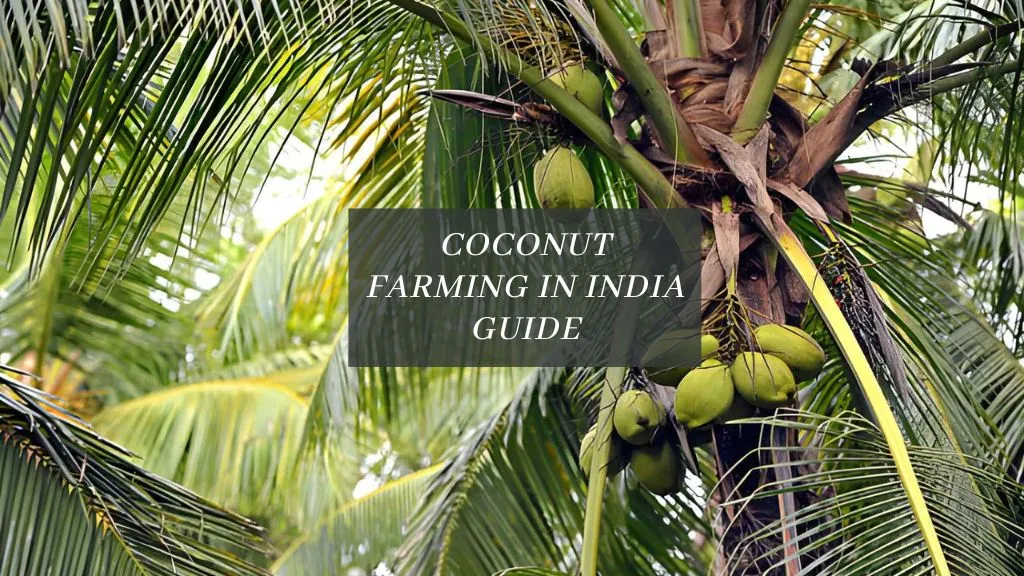
Coconut is often called the "Tree of Life", and for good reason. From fresh tender coconuts and copra to coconut oil, coir, and timber, almost every part of the tree has commercial value. Even better, a well-maintained coconut plantation can continue producing for 60 to 80 years, making it one of the most rewarding long-term agricultural investments in India.
However, successful coconut farming is about much more than simply planting saplings. Factors like land selection, tree spacing, irrigation, soil quality, and variety selection play a major role in determining your long-term returns.
If you're planning to start coconut farming in India, this guide covers everything you need to know—including how many coconut trees can be planted per acre, investment costs, coconut tree prices, expected yield, profit per acre, and common farming mistakes.
Let’s break down the truth about coconut farming in india.
How Many Coconut Trees Can Be Planted in an Acre?
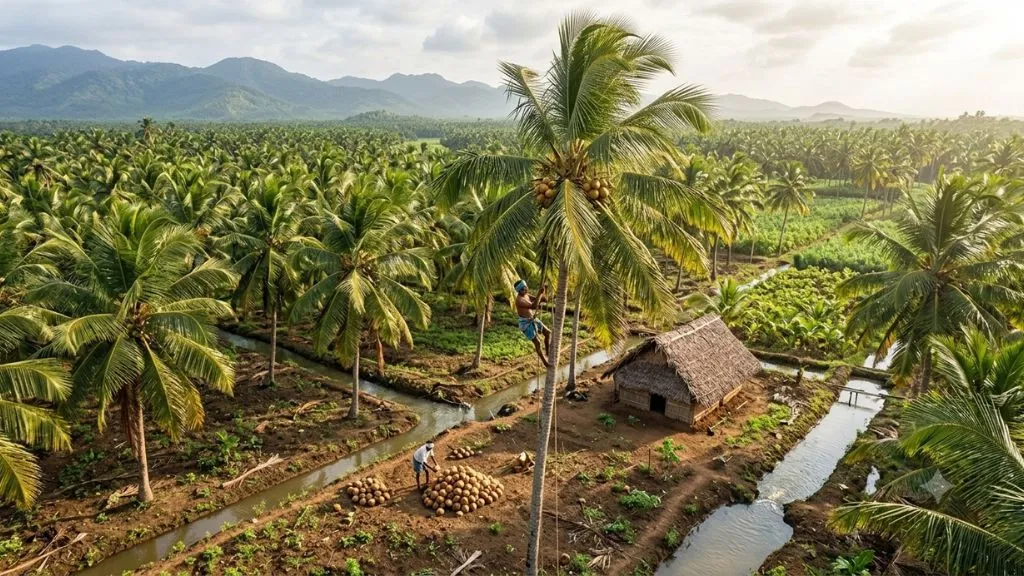
This is where most beginners mess up big time. They think overcrowding the land equals more profit. It doesn't! Coconuts need massive amounts of direct sunlight, air circulation, and root expansion space.
The standard industry spacing depends heavily on whether you are planting Tall, Dwarf, or Hybrid varieties:
Optimal Spacing Matrix:
Tall Varieties (8m x 8m) ➔ ~60 Trees / Acre ➔ Maximum Lifespan (60-80 yrs)
Hybrid Varieties (7.5m x 7.5m) ➔ ~70 Trees / Acre ➔ High Yield & Early Bearing
Dwarf Varieties (6.5m x 6.5m) ➔ ~90 Trees / Acre ➔ Tender Coconut Special
So, when asking how many coconut trees can be planted in an acre, the realistic answer is 60 to 70 palms for long-term commercial sustainability. If you squeeze in 120 trees, their fronds will block each other's sunlight, and your individual tree yield will plummet drastically.
Also Read: Health Benefits of Coconut Flower
Coconut Farming Investment: Tree Price & Initial Setup Cost
Starting a plantation from scratch needs a bit of upfront capital. Here is what your initial setup costs will roughly look like per acre:
Sapling Cost: The initial coconut tree price for a certified high-yielding hybrid or tall sapling from a trusted nursery ranges between ₹150 to ₹350 per plant. For 70 trees, that is about ₹14,000 to ₹24,500.
Pit Digging & Soil Prep: Digging 3ft x 3ft x 3ft pits, filling them with topsoil, organic Farmyard Manure (FYM), and neem cake costs around ₹15,000 per acre.
Drip Irrigation System: Crucial! A single mature tree needs roughly 80 to 100 liters of water per day in summer. Installing a solid drip line network costs around ₹30,000–₹40,000 per acre.
Coconut Farming Profit Per Acre: Yield, Income & ROI
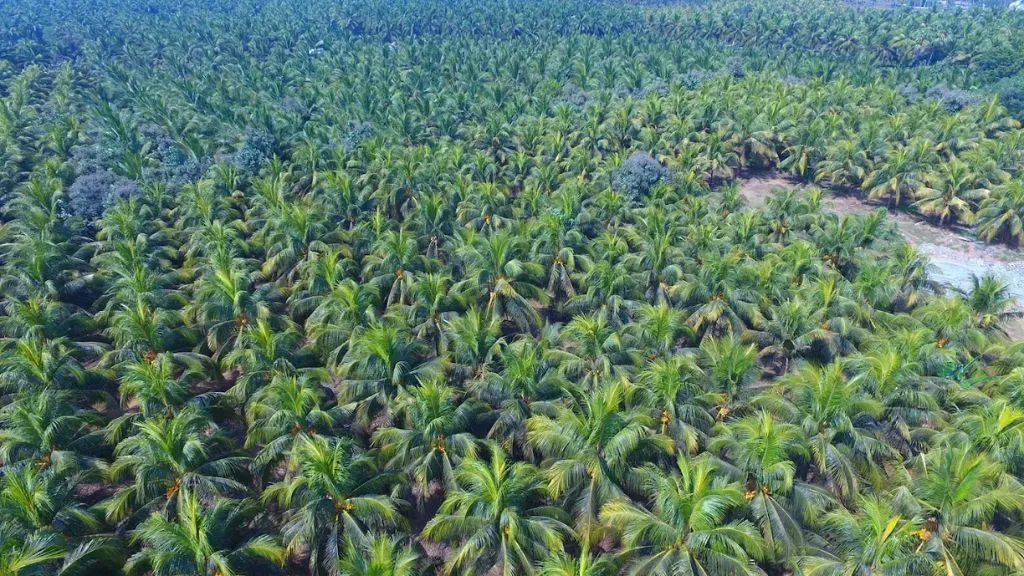
Now for the part everybody actually wants to know, what is the real 1 acre coconut farm income once the trees start bearing?
Let's do some conservative math based on mature, well-managed hybrid palms:
Parameter | Tall Varieties | High-Yield Hybrids |
Gestation Period | 6 to 7 years | 3 to 4 years |
Average Trees per Acre | 60 trees | 70 trees |
Average Yield per Tree / Year | 80 to 100 nuts | 150 to 200 nuts |
Total Annual Coconut Yield per Acre | ~5,400 to 6,000 nuts | ~10,500 to 14,000 nuts |
Average Wholesale Market Price | ₹15 to ₹25 per nut | ₹15 to ₹25 per nut |
Gross Annual Revenue (At ₹20/nut) | ₹1,08,000 - ₹1,20,000 | ₹2,10,000 - ₹2,80,000 |
After subtracting annual operational expenses (fertilizers, organic manure, weeding, and climbing/harvesting labor costs of roughly ₹40,000 per year), your net 1 acre coconut farm income sits comfortably between ₹1.5 Lakhs to ₹2.3 Lakhs annually for hybrid varieties.
Pro-Tip for Early Years: Since tall trees take nearly 6 years to yield full income, smart farmers intercrop legumes, bananas, turmeric, or ginger in the open rows between trees. This generates cash flow to cover maintenance expenses during the initial waiting period!
Ideal Soil, Climate & Water Requirements for Coconut Farming
Before you spend a single rupee on saplings, make sure your land ticks these vital boxes:
Soil Quality: Deep sandy loam, laterite, or alluvial soil with a neutral pH of 5.5 to 7.5. Avoid heavy, water-logged clay soils like the plague, coconut roots will rot quickly in stagnant water.
Sunlight: Full, unshaded exposure.
Water Availability: Rainfed farms work in coastal high-rainfall belts, but for interior regions, reliable drip irrigation is non-negotiable.
Common Mistakes to Avoid in Coconut Farming
It isn't all easy passive money, though. You have to watch out for a few real-world hurdles:
Pests: Rhinoceros beetle and Red Palm Weevil are absolute nightmares. You need regular biological controls and organic neem cake applications.
Labor for Harvesting: Finding skilled tree climbers every 45 days is getting harder across India. Many farmers are now shifting to mechanized pole harvesters or planting dwarf varieties specifically for tender coconut markets.
How Swasya Practices Sustainable Coconut Farming
At Swasya, we view coconut trees as much more than just a mono-crop yield generator. Across our managed farmlands, coconut palms form the natural backbone of a rich, multi-tier ecosystem.
Instead of bare, chemical-heavy soil between trees, we integrate native shade plants, organic bee farming hives, and traditional cattle grazing. The fallen fronds become natural mulch, returning organic carbon to the soil, while the bee hives improve pollination and produce pure, unheated raw honey. It’s an approach where your land doesn't just produce coconuts, it builds long-term generational value and healthier soil for decades to come.
Whether you are looking to plant a few rows on your personal estate or build a full-scale commercial farm, getting the fundamentals right today ensures a steady, peaceful harvest for the rest of your life.
FAQs
1: What is the average net 1 acre coconut farm income you can expect in India?
A mature, well-managed acre can realistically bring in a clean profit of ₹1,60,000 to ₹2,40,000 annually from high-yielding hybrids.
2: How many coconut trees can be planted in an acre without overcrowding the crop?
You can comfortably plant 60 tall traditional varieties or up to 70 to 100 high-density hybrid trees per acre.
3: What is the standard coconut tree price at local Indian nurseries?
The average coconut tree price ranges between ₹150 to ₹350 per sapling, depending entirely on whether you choose a tall or dwarf hybrid variety.
4: How long does a new coconut farm take to start producing a profitable yield?
Modern hybrid trees start fruiting within 3 to 4 short years, whereas traditional tall palms require a longer waiting period of 6 to 7 years.
5: What critical factors directly determine the total coconut yield per acre?
Your overall coconut yield per acre depends on using high-quality saplings, proper wide spacing for sunlight, and a consistent drip irrigation system.
6: Is coconut farming in india a practical option for long-term passive investors?
Yes, commercial coconut farming in india is a highly lucrative generational investment because mature palms produce steady returns for over 60 to 80 years.
Coconut is often called the "Tree of Life", and for good reason. From fresh tender coconuts and copra to coconut oil, coir, and timber, almost every part of the tree has commercial value. Even better, a well-maintained coconut plantation can continue producing for 60 to 80 years, making it one of the most rewarding long-term agricultural investments in India.
However, successful coconut farming is about much more than simply planting saplings. Factors like land selection, tree spacing, irrigation, soil quality, and variety selection play a major role in determining your long-term returns.
If you're planning to start coconut farming in India, this guide covers everything you need to know—including how many coconut trees can be planted per acre, investment costs, coconut tree prices, expected yield, profit per acre, and common farming mistakes.
Let’s break down the truth about coconut farming in india.
How Many Coconut Trees Can Be Planted in an Acre?
This is where most beginners mess up big time. They think overcrowding the land equals more profit. It doesn't! Coconuts need massive amounts of direct sunlight, air circulation, and root expansion space.
The standard industry spacing depends heavily on whether you are planting Tall, Dwarf, or Hybrid varieties:
Optimal Spacing Matrix:
Tall Varieties (8m x 8m) ➔ ~60 Trees / Acre ➔ Maximum Lifespan (60-80 yrs)
Hybrid Varieties (7.5m x 7.5m) ➔ ~70 Trees / Acre ➔ High Yield & Early Bearing
Dwarf Varieties (6.5m x 6.5m) ➔ ~90 Trees / Acre ➔ Tender Coconut Special
So, when asking how many coconut trees can be planted in an acre, the realistic answer is 60 to 70 palms for long-term commercial sustainability. If you squeeze in 120 trees, their fronds will block each other's sunlight, and your individual tree yield will plummet drastically.
Also Read: Health Benefits of Coconut Flower
Coconut Farming Investment: Tree Price & Initial Setup Cost
Starting a plantation from scratch needs a bit of upfront capital. Here is what your initial setup costs will roughly look like per acre:
Sapling Cost: The initial coconut tree price for a certified high-yielding hybrid or tall sapling from a trusted nursery ranges between ₹150 to ₹350 per plant. For 70 trees, that is about ₹14,000 to ₹24,500.
Pit Digging & Soil Prep: Digging 3ft x 3ft x 3ft pits, filling them with topsoil, organic Farmyard Manure (FYM), and neem cake costs around ₹15,000 per acre.
Drip Irrigation System: Crucial! A single mature tree needs roughly 80 to 100 liters of water per day in summer. Installing a solid drip line network costs around ₹30,000–₹40,000 per acre.
Coconut Farming Profit Per Acre: Yield, Income & ROI
Now for the part everybody actually wants to know, what is the real 1 acre coconut farm income once the trees start bearing?
Let's do some conservative math based on mature, well-managed hybrid palms:
Parameter | Tall Varieties | High-Yield Hybrids |
Gestation Period | 6 to 7 years | 3 to 4 years |
Average Trees per Acre | 60 trees | 70 trees |
Average Yield per Tree / Year | 80 to 100 nuts | 150 to 200 nuts |
Total Annual Coconut Yield per Acre | ~5,400 to 6,000 nuts | ~10,500 to 14,000 nuts |
Average Wholesale Market Price | ₹15 to ₹25 per nut | ₹15 to ₹25 per nut |
Gross Annual Revenue (At ₹20/nut) | ₹1,08,000 - ₹1,20,000 | ₹2,10,000 - ₹2,80,000 |
After subtracting annual operational expenses (fertilizers, organic manure, weeding, and climbing/harvesting labor costs of roughly ₹40,000 per year), your net 1 acre coconut farm income sits comfortably between ₹1.5 Lakhs to ₹2.3 Lakhs annually for hybrid varieties.
Pro-Tip for Early Years: Since tall trees take nearly 6 years to yield full income, smart farmers intercrop legumes, bananas, turmeric, or ginger in the open rows between trees. This generates cash flow to cover maintenance expenses during the initial waiting period!
Ideal Soil, Climate & Water Requirements for Coconut Farming
Before you spend a single rupee on saplings, make sure your land ticks these vital boxes:
Soil Quality: Deep sandy loam, laterite, or alluvial soil with a neutral pH of 5.5 to 7.5. Avoid heavy, water-logged clay soils like the plague, coconut roots will rot quickly in stagnant water.
Sunlight: Full, unshaded exposure.
Water Availability: Rainfed farms work in coastal high-rainfall belts, but for interior regions, reliable drip irrigation is non-negotiable.
Common Mistakes to Avoid in Coconut Farming
It isn't all easy passive money, though. You have to watch out for a few real-world hurdles:
Pests: Rhinoceros beetle and Red Palm Weevil are absolute nightmares. You need regular biological controls and organic neem cake applications.
Labor for Harvesting: Finding skilled tree climbers every 45 days is getting harder across India. Many farmers are now shifting to mechanized pole harvesters or planting dwarf varieties specifically for tender coconut markets.
How Swasya Practices Sustainable Coconut Farming
At Swasya, we view coconut trees as much more than just a mono-crop yield generator. Across our managed farmlands, coconut palms form the natural backbone of a rich, multi-tier ecosystem.
Instead of bare, chemical-heavy soil between trees, we integrate native shade plants, organic bee farming hives, and traditional cattle grazing. The fallen fronds become natural mulch, returning organic carbon to the soil, while the bee hives improve pollination and produce pure, unheated raw honey. It’s an approach where your land doesn't just produce coconuts, it builds long-term generational value and healthier soil for decades to come.
Whether you are looking to plant a few rows on your personal estate or build a full-scale commercial farm, getting the fundamentals right today ensures a steady, peaceful harvest for the rest of your life.
FAQs
1: What is the average net 1 acre coconut farm income you can expect in India?
A mature, well-managed acre can realistically bring in a clean profit of ₹1,60,000 to ₹2,40,000 annually from high-yielding hybrids.
2: How many coconut trees can be planted in an acre without overcrowding the crop?
You can comfortably plant 60 tall traditional varieties or up to 70 to 100 high-density hybrid trees per acre.
3: What is the standard coconut tree price at local Indian nurseries?
The average coconut tree price ranges between ₹150 to ₹350 per sapling, depending entirely on whether you choose a tall or dwarf hybrid variety.
4: How long does a new coconut farm take to start producing a profitable yield?
Modern hybrid trees start fruiting within 3 to 4 short years, whereas traditional tall palms require a longer waiting period of 6 to 7 years.
5: What critical factors directly determine the total coconut yield per acre?
Your overall coconut yield per acre depends on using high-quality saplings, proper wide spacing for sunlight, and a consistent drip irrigation system.
6: Is coconut farming in india a practical option for long-term passive investors?
Yes, commercial coconut farming in india is a highly lucrative generational investment because mature palms produce steady returns for over 60 to 80 years.
Akshata
You Might Also Like


Subscribe to the Swasya
newsletter
Discover insights about sustainable farming, investment opportunities, and the future of agriculture.
By subscribing, you agree to the Privacy Policy
Subscribe to the Swasya
newsletter
Discover insights about sustainable farming, investment opportunities, and the future of agriculture.
By subscribing, you agree to the Privacy Policy