Farming
Sustainable Farming Methods & Techniques | 2026 Guide for Indian Farmers
Bangalore’s weather isn't what it used to be. One day it’s pouring like there’s no tomorrow, and the next, the heat is so dry your plants start drooping by noon. If you’re like me, someone who loves the idea of a green escape but worries about the planet, you’ve probably wondered- how do we grow food without killing the earth?
At Swasya Living, we get this question a lot from our community. Everyone wants a farm, but nobody wants to be part of the problem, you know, the chemical runoff, the soil depletion, and the water wastage. That’s where sustainable farming methods come into play. It’s not just a "organic" label, it’s a whole way of living and managing land so that our kids can enjoy the same mangoes we do today.
In this guide, I’m breaking down what are the most sustainable farming methods and how we actually make them work on the ground without losing our minds (or our profits!)
What Is Sustainable Agriculture?
Sustainable agriculture promotes steady, ongoing production while ensuring enough resources for the future. It aligns with the five principles of sustainable agriculture set by the FAO:
Increase food chain productivity.
Preserve and conserve environmental resources.
Enhance people's well-being and economic growth.
Strengthen resilience in ecosystems and communities.
Align with governmental initiatives and regulations.
Sustainability in a Nutshell: The 4 R’s
Before we dive into the dirt, remember the 4 R’s we live by at Swasya:
Reduce: Cutting down on chemical inputs.
Reuse: Turning farm waste into "black gold" (compost).
Recycle: Using water over and over through smart systems.
Rethink: Checking if we really need that tractor or if manual mulching is better.
Traditional vs. Sustainable Agriculture Methods
Practice | Traditional Way | Sustainable Agriculture Methods |
Pest Control | Heavy chemical sprays | Integrated Pest Management (IPM) |
Water Use | Flood irrigation | Drip & Rainwater Harvesting |
Soil Health | Synthetic Fertilizers | Composting & Cover Crops |
Energy | Grid/Diesel Power | Solar & Wind Energy |
Profitability | High cost, high risk | Lower cost, steady resilience |
Crop Rotation: The Oldest (and Best) Trick in the Book
One of the best sustainable farming practices is simply changing what you grow and where. If you grow the same crop year after year, the soil gets tired, it loses specific nutrients and attracts the same old pests.
By alternating between, say, cereals and pulses, you’re letting the soil "breathe." Pulses actually fix nitrogen back into the dirt, acting like a natural (and free!) fertilizer for the next crop. It’s one of the simplest sustainable agriculture techniques to implement, even on a small plot.
2. Managed Agroforestry
At Swasya, we love agroforestry. It’s the practice of planting trees and shrubs right among your crops. Why? Because trees act as windbreaks, prevent soil erosion, and create a "microclimate" that keeps things cool. In our gated community farmland near Bangalore, we use this to grow fruits, timber, and herbs all in one space. It’s one of the types of sustainable agriculture that actually makes the land look like a forest, not a factory.
3. Drip Irrigation & Harvesting
Let’s talk water. In India, water is basically gold. Sustainable farming techniques like drip irrigation deliver water straight to the roots, which means zero wastage. Pair that with mulching (covering the soil with straw or wood chips), and you’ve got a system that keeps the ground moist even in peak April heat.
If you’re looking for methods for sustainable agriculture that save money, this is it. Less water pumped = lower electricity bills. Plus, we always encourage farm ponds to catch that Bangalore monsoon rain!
4. Integrated Pest Management (IPM)
Instead of reaching for the poison the moment you see a bug, IPM is about balance. You bring in "good bugs" (like ladybirds) to eat the "bad bugs." You use bird perches so owls and eagles can take care of rodents. It’s about top farming practices for sustainability where you work with nature’s food chain instead of fighting it.
5. The Power of Organic Inputs & Soil Health
Healthy soil is the foundation of everything. We use composting and animal manure to build up "Organic Matter." This makes the soil spongy and full of life (microbes!). When the soil is healthy, the plants are stronger and less likely to get sick. If you’re wondering how to make passive income from land, having rich, fertile soil is your biggest asset, it keeps your yields high for decades.
The Future is Green (and Profitable)
Look, the world is changing. People want to know where their food comes from and how it was grown. Adopting sustainable farming methods isn't just about being "kind to nature", it’s a smart business move. It reduces your risks, cuts your costs, and ensures your land stays fertile forever.
At Swasya Living, we live and breathe these best ways to support sustainable agriculture. Our managed farms are designed to be self-sustaining ecosystems that take care of themselves (and you!).
FAQs
1: Is sustainable farming more expensive to start?
Actually, no. While things like solar panels or drip systems have an upfront cost, sustainable farming methods like composting and crop rotation are much cheaper than buying expensive chemical bags every month.
2: What are the most sustainable farming methods for small plots?
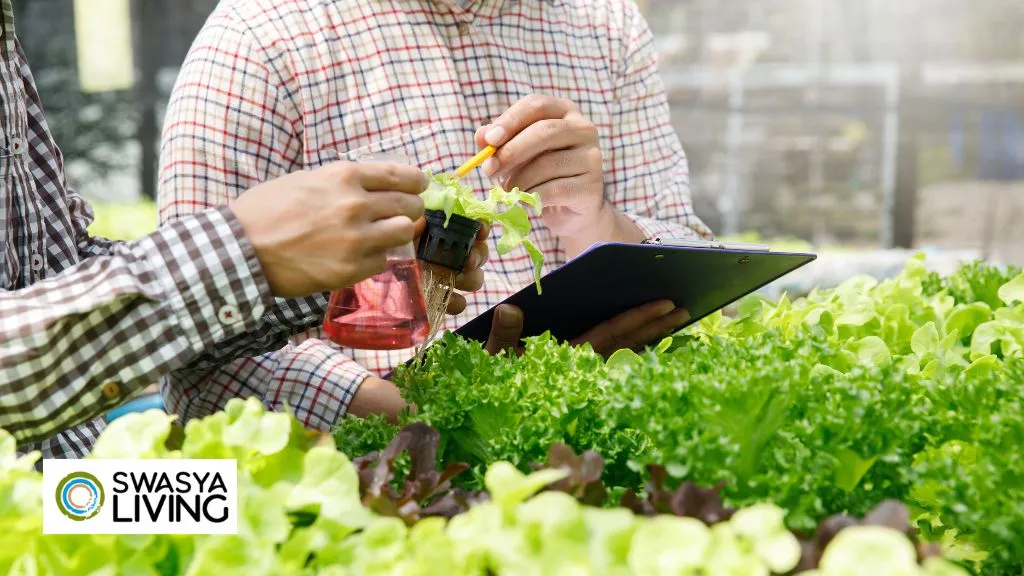
For a small farm, I’d say Hydroponics or Permaculture are the best ways to support sustainable agriculture. You get a huge yield from a tiny space without exhausting the ground.
3: Does sustainable farming mean lower yields?
Maybe in the first year as the soil "detoxes" from chemicals. But after that, the yields become much more stable and the quality of produce (taste and nutrition) is way better.
4: Can we use renewable energy on a farm?
Definitely! Solar-powered pumps are a massive hit right now. It’s one of the top farming practices for sustainability because it provides free energy for life once the panels are up.
5: How does this help with climate change?
By using sustainable agriculture techniques, we trap carbon in the soil instead of releasing it. Also, fewer chemicals mean less greenhouse gas emissions. You’re literally helping the planet while growing your wealth.
6: What is "Biodynamic Farming"?
It’s like organic farming but treats the whole farm as one living organism. You use the manure from your cows to feed the plants, and the waste from the plants to feed the cows. It’s a perfect circle!
Bangalore’s weather isn't what it used to be. One day it’s pouring like there’s no tomorrow, and the next, the heat is so dry your plants start drooping by noon. If you’re like me, someone who loves the idea of a green escape but worries about the planet, you’ve probably wondered- how do we grow food without killing the earth?
At Swasya Living, we get this question a lot from our community. Everyone wants a farm, but nobody wants to be part of the problem, you know, the chemical runoff, the soil depletion, and the water wastage. That’s where sustainable farming methods come into play. It’s not just a "organic" label, it’s a whole way of living and managing land so that our kids can enjoy the same mangoes we do today.
In this guide, I’m breaking down what are the most sustainable farming methods and how we actually make them work on the ground without losing our minds (or our profits!)
What Is Sustainable Agriculture?
Sustainable agriculture promotes steady, ongoing production while ensuring enough resources for the future. It aligns with the five principles of sustainable agriculture set by the FAO:
Increase food chain productivity.
Preserve and conserve environmental resources.
Enhance people's well-being and economic growth.
Strengthen resilience in ecosystems and communities.
Align with governmental initiatives and regulations.
Sustainability in a Nutshell: The 4 R’s
Before we dive into the dirt, remember the 4 R’s we live by at Swasya:
Reduce: Cutting down on chemical inputs.
Reuse: Turning farm waste into "black gold" (compost).
Recycle: Using water over and over through smart systems.
Rethink: Checking if we really need that tractor or if manual mulching is better.
Traditional vs. Sustainable Agriculture Methods
Practice | Traditional Way | Sustainable Agriculture Methods |
Pest Control | Heavy chemical sprays | Integrated Pest Management (IPM) |
Water Use | Flood irrigation | Drip & Rainwater Harvesting |
Soil Health | Synthetic Fertilizers | Composting & Cover Crops |
Energy | Grid/Diesel Power | Solar & Wind Energy |
Profitability | High cost, high risk | Lower cost, steady resilience |
Crop Rotation: The Oldest (and Best) Trick in the Book
One of the best sustainable farming practices is simply changing what you grow and where. If you grow the same crop year after year, the soil gets tired, it loses specific nutrients and attracts the same old pests.
By alternating between, say, cereals and pulses, you’re letting the soil "breathe." Pulses actually fix nitrogen back into the dirt, acting like a natural (and free!) fertilizer for the next crop. It’s one of the simplest sustainable agriculture techniques to implement, even on a small plot.
2. Managed Agroforestry
At Swasya, we love agroforestry. It’s the practice of planting trees and shrubs right among your crops. Why? Because trees act as windbreaks, prevent soil erosion, and create a "microclimate" that keeps things cool. In our gated community farmland near Bangalore, we use this to grow fruits, timber, and herbs all in one space. It’s one of the types of sustainable agriculture that actually makes the land look like a forest, not a factory.
3. Drip Irrigation & Harvesting
Let’s talk water. In India, water is basically gold. Sustainable farming techniques like drip irrigation deliver water straight to the roots, which means zero wastage. Pair that with mulching (covering the soil with straw or wood chips), and you’ve got a system that keeps the ground moist even in peak April heat.
If you’re looking for methods for sustainable agriculture that save money, this is it. Less water pumped = lower electricity bills. Plus, we always encourage farm ponds to catch that Bangalore monsoon rain!
4. Integrated Pest Management (IPM)
Instead of reaching for the poison the moment you see a bug, IPM is about balance. You bring in "good bugs" (like ladybirds) to eat the "bad bugs." You use bird perches so owls and eagles can take care of rodents. It’s about top farming practices for sustainability where you work with nature’s food chain instead of fighting it.
5. The Power of Organic Inputs & Soil Health
Healthy soil is the foundation of everything. We use composting and animal manure to build up "Organic Matter." This makes the soil spongy and full of life (microbes!). When the soil is healthy, the plants are stronger and less likely to get sick. If you’re wondering how to make passive income from land, having rich, fertile soil is your biggest asset, it keeps your yields high for decades.
The Future is Green (and Profitable)
Look, the world is changing. People want to know where their food comes from and how it was grown. Adopting sustainable farming methods isn't just about being "kind to nature", it’s a smart business move. It reduces your risks, cuts your costs, and ensures your land stays fertile forever.
At Swasya Living, we live and breathe these best ways to support sustainable agriculture. Our managed farms are designed to be self-sustaining ecosystems that take care of themselves (and you!).
FAQs
1: Is sustainable farming more expensive to start?
Actually, no. While things like solar panels or drip systems have an upfront cost, sustainable farming methods like composting and crop rotation are much cheaper than buying expensive chemical bags every month.
2: What are the most sustainable farming methods for small plots?
For a small farm, I’d say Hydroponics or Permaculture are the best ways to support sustainable agriculture. You get a huge yield from a tiny space without exhausting the ground.
3: Does sustainable farming mean lower yields?
Maybe in the first year as the soil "detoxes" from chemicals. But after that, the yields become much more stable and the quality of produce (taste and nutrition) is way better.
4: Can we use renewable energy on a farm?
Definitely! Solar-powered pumps are a massive hit right now. It’s one of the top farming practices for sustainability because it provides free energy for life once the panels are up.
5: How does this help with climate change?
By using sustainable agriculture techniques, we trap carbon in the soil instead of releasing it. Also, fewer chemicals mean less greenhouse gas emissions. You’re literally helping the planet while growing your wealth.
6: What is "Biodynamic Farming"?
It’s like organic farming but treats the whole farm as one living organism. You use the manure from your cows to feed the plants, and the waste from the plants to feed the cows. It’s a perfect circle!
Akshata
You Might Also Like

Subscribe to the Swasya
newsletter
Discover insights about sustainable farming, investment opportunities, and the future of agriculture.
By subscribing, you agree to the Privacy Policy
Subscribe to the Swasya
newsletter
Discover insights about sustainable farming, investment opportunities, and the future of agriculture.
By subscribing, you agree to the Privacy Policy